Various UK members
Testimonies 03/10/2013 (compilation)
YouTube · FFWPU UK · 1:04:14 · UK
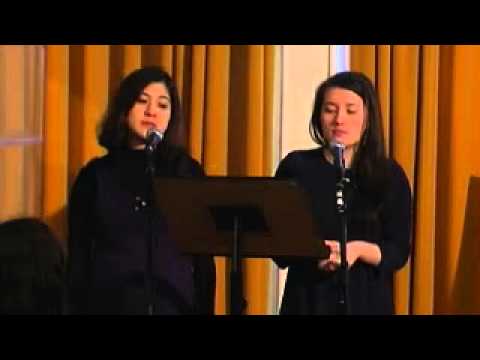
A compilation of UK testimonies from October 2013 opens with the worship song "Lord Reign in Me" and continues with Helena introducing her life in Wembley, her five children, and the friends and prayer group who have supported her.
Helena: My name's Helena. I have five children and I live in Wembley. I've got two very good friends up there who have been there for a long time—20 years we've lived in Wembley, or that area—and I couldn't have got through without them. They know who they are; one of them is here today. I've also got a very good friend who prays a lot—he's very good prayer support—and he has some other sisters who pray a lot and support me too. And there's Mr. Hayashi as well. On a Monday morning, since the year dot, Mr. Hayashi's been having us together, praying and supporting. We just go along and ask him and he helps you—he's like our uncle or something. That's one way I feel God works in my life, through my friends.
Simon is a good support as well. He really is. Because I can ring him up and say, "Simon, can you come round?" and he'll come round and I'll just talk to him. He listens to me, and he says, "You're doing a really good job, Helena." And I'm like, "Oh, thanks." I remember the first time Simon was going to come to my house—because he gave a testimony at the Sunday service the week after—and he said he was a bit scared to come up to my house, because I'm an older member and I've got issues, and he knew I'd want to discuss them. And I did. I discussed them with him in great detail.
But then we made him tea and we all sat down, and we had a few friends round. And after he came, he said he was quite daunted in the beginning. But actually it turned around and became like a family evening in the house. He quite liked it. He was quite inspired. So he was quite happy. Thanks, Simon—he's watching us right now.
I'm also a bit nervous because there's a big gap—I feel there's a gap between the older members and the up-and-coming crowd—and I'm really sorry about that. I really need to make more effort with our older second gen. My kids are 23, 22, 21. And I try and understand them. They're another reason how I get through my life. I can live again through them and get a lot of strength and energy from being with my kids.
We fight. It's not that we don't fight. We don't have a perfect relationship where we're all just going, "I love you, I love you, you're great." We fight with each other and we have misunderstandings, and then afterwards we make up. And it's great, because I tend to think they're children when they're not children anymore, and then I misunderstand them and they misunderstand me.
I'm a single parent, by the way. It's horrible, but it's my life. I find it very hard even to admit it. I don't want you to think less of me, but it's not by my choice—it's just how it happened. We still have a very fulfilling life, but it is hard. It's hard doing that, raising the children by myself. I don't have a car, but we've got quite a good transport situation—right by the train station, which makes a lot of noise, but it means we can go places without having to be dependent on other people.
I'm very independent, actually. I'm very proud. I don't like asking people for help—"Can you give me a lift?" "Can you help me?"—I don't really like doing it, even though I actually need quite a lot of help. I'm quite a lonely person as well, but because I've got my friends, I'm alright. And actually, being lonely is not such a bad thing, because I learnt quite early in my life to depend on God, because I didn't really have anybody else who understood me.
Sometimes you think, nobody understands me. When I was a child, I used to run off and hide in the bathroom and cry. It sounds a bit funny, but it wasn't funny, because eventually this big warm hug would come and it would say, "It's alright, Helena, I love you." It took me a while to understand it was God, because I didn't really go to anything. I'm from the Church of Scotland—it's a bit different, not an in-your-face kind of religion.
Now I'm in London and I don't have any of my family—just my friends. Me and my five kids is what I've got. We live in a small three-bedroom house. And when we talk about witnessing, witnessing used to be so separate—you used to have your life and then you used to have your witnessing guests. But I've got a very good friend who is also a witnessing contact, and she's helped me through a lot of things. So it works both ways.
Especially since my father died, sometimes I'm sitting on the bus and I just think of everything that's going on and I think, "I don't know how I'm going to get through." And then I just go, "Please help me to cope." A little voice comes, and then I just get this strength from nowhere. Well, I know where it comes from. It's just there. It's amazing.
Because Heung Jin Nim died—he died in 1984—and I used to believe in him and pray to him a lot. So when my father died, I thought it was going to be the same, but it's much more powerful. It's tremendous. It's invisible, but that's where it's important. That's what you need—you need that something. Our life is made up of so much secular stuff. But actually, the spiritual is a lot of me. I'm not sermonising—it's just that for me it's important to be able to really connect in that way.
I do have quite a heavy week, and sometimes I can't cope physically—I just have to go to bed. But I like to push myself, because my kids have a lot of needs and we do a lot of things. I like to get up early, but sometimes I can't. I've got to take my son to school. It's 20 years I've been taking children to school at nine o'clock—20 years, the same school with different kids. So it's really telling on my health. I'm not so strong any more.
Helena: My son sometimes takes him. And then the government — because I'm single — pushed me to get a job. Otherwise I wouldn't be able to survive. So I asked Mr. Ayers to pray for me to get a job. It was just when True Father died, because I'd been trying for three years. So I just said, look, Father, what will I do? I need to get this job. I got offered two jobs at the same time, but it was very iffy if I'd get them. And I got them because Mr. Ayers — I sat over there and prayed. And then I got the job. It was very clear. A few days afterwards, I got it.
It's a really good job in a Catholic college, taking a Down syndrome girl to college. And it's renewed my faith in a lot of ways — to see how there are actually very religious people in this world, in this country, in London, in Britain. Because where we are, there are a lot of migrant workers, and you just don't get a chance to get to know them or their faith or anything. But this is a well-established college, 35 years old. And it just really made me think — England is not dead. There's a lot here.
I've actually got two jobs. I teach as well, and I do home care. Home care is from 7 in the morning until 10 at night, but they want me to do more days. Sometimes I have to work Saturday, Sunday. I remember one month I worked every day — I was doing something every day, I didn't get any break, and I was nearly dead at the end. But I couldn't come to church, which was the problem. I realised that's a big key — being able to come here and meet brothers and sisters.
The Blessing was — I liked it when we did the Blessing. I thought it would be so different, but I thought it was really, really nice. I saw True Mother. She's single as well now. It's hard for her. I could really relate to True Mother, and straddling the spirit world and physical world — I think that's not an easy thing. But I was so impressed with her, and I really liked that. I need to work on my relationship with her, because True Father was always there — big personality. I have to work on getting a closer connection to True Mother.
I really feel my children — I have to come back to them. I gave a testimony the other week. They're my key. That's what I live for. I'm just living for them. They're my biggest achievement. I'm so happy. I have a degree — I worked really hard to get my degree, and I really value it so much. But when I've got my children, I just thought, no, they are really — again and again, I really feel that they are my big blessing.
Speaker 2: I went to Korea because of Foundation Day. Somehow I had always thought there were other times I'd wanted to go to Korea, but I hadn't pushed myself enough to go. I always told myself, when Foundation Day comes, I'll go. And also because my son was getting blessed — the Blessing then. So it seemed to work out very well that these two very important things were both happening. Yes, it can be challenging to go to Korea. Sometimes I think, oh, it's going to be too many people, it will be crowded, there'll be nowhere to sleep, it will be difficult to find anything to eat. All these thoughts come, so it's quite challenging.
But I felt a bit more confident this time because I was going with my son and future daughter-in-law — we were all travelling together. So I felt, well, at least they will support me if anything happens. And actually, Korea this time was really wonderful. Everything was organised so nicely. There wasn't any problem with transport or accommodation. Everything was just arranged so nicely for all the members going over there. The Western members were staying at a place called Hanwha Resort — it's a Korean-style hotel — and we had rooms for about six or seven people. It was very, very nice there.
This was the couples who were going to be blessed, plus the parents. The programme started off with lectures for the young couples. Parents were allowed to attend, but we had to stay at the back and just listen. The lectures were mainly for the young couples, and they were very nice. I was very moved by one second generation — he's from America, probably in his 30s, blessed to a Korean sister. He was there with his wife and all his children — the whole family was there. And he could speak from his own experience about the Blessing. I thought that was very good for the young people. There was a very high spirit, and everyone was preparing for the Blessing the next day.
In the evening, there was a dinner for the young couples, and it wasn't at Hanwha Resort — they went somewhere else, and parents weren't invited. So I think they had a very nice time there. The brides were getting ready in the nighttime for the Blessing the next day — I think even Don and Marianne were helping with that, so they know very well. It was a very exciting time for everybody, with a very high spirit. The Blessing was held in the World Peace Center, and all the young couples were, of course, in the main part of the centre. The guests and parents had to be upstairs.
But I felt very lucky because I could get a place just upstairs, very close to where my son and daughter-in-law were standing — just upstairs from them. So I could look down and see them very easily. It was very nice. I was taking photographs. And when they exchanged rings and made their vows, I felt such a sincerity from all the young couples and such a deep heart. I felt, wow, this is amazing, really. They are so prepared — they really are prepared for this Blessing. And surely God will guide them in the future years.
Of course, it wasn't just second generation — there were a few first generation couples too. I was very happy to see one older brother that I used to know for many years. He hadn't ever been blessed, but this time he was blessed, and he and his wife just looked so right together. They looked so happy. It was just lovely to see that. After the Blessing, I went with my son and daughter-in-law to visit my husband's family in Japan. We only had one and a half days.
Amazingly, despite the fact that none of us speak Japanese, the journey went amazingly well — we didn't get lost. Arina's mum had given me a wonderful guide — a map and a list of the times of the buses and everything. But even with that, I thought I still might get lost. It didn't happen. We got there safely. We were waiting at the station — we knew we had to go from one station to get a train to my mother-in-law's house — and we were looking for the platform when suddenly somebody appeared in front of us, smiling. It was my husband's brother. He had come to meet us unexpectedly, and he brought us to his mother's house.
I had heard my mother-in-law was not very well — she's getting elderly. They had said to us, oh, maybe she can't cook anything, you can stay but you should do your own cooking. But when we arrived, the food was ready. And there she was in the kitchen, so full of energy. I was just amazed to see her like that. It was a very short visit, but we felt it was really like a blessing to be there. And I was very happy because I felt she really accepted her new — not daughter-in-law, but granddaughter-in-law. It was very nice.
We went back to Korea for Foundation Day. What can I say about Foundation Day? It was very good — a big blessing to be there. When we saw True Mother's seriousness, we really felt, how is she feeling? Afterwards, I thought, well, actually, it's good that she is so serious, because we can really trust her. She's really totally focused on God and on God's providence. Because of her total seriousness, we can really rely on her to guide us forward at this time.
Foundation Day was a very special celebration. The only thing I felt was that I was expecting it to be longer — it somehow finished quickly. But I heard that there was another celebration at the palace; that was for ambassadors for peace and for leaders and special guests, so most of the members didn't go to that. After Foundation Day, we had a chance for sightseeing. We could visit Cheongpyeong — very nice experiences. It was a great blessing. I feel very privileged to have gone there, and I think the grace and the blessing from Foundation Day is really coming to all of us. It's a very special time, and through that, we can all have a lot of grace to go forward after this.
Speaker 2: I heard from second-gen mainly, especially STF members, that Albania was a great place for witnessing and that the church is very vibrant there. I was hearing this for a long time. To be honest, I didn't know where Albania was at that time, and I'd only ever seen Albanians in movies, and they always seemed to be gangsters and dangerous people. So I just blocked it out. But the message kept coming — Albania is a great place. So I started thinking about it more and more, and I did some research. I watched the movie Taken and Taken 2, but that scared me even more. But they assured me it was a great, wonderful place.
So anyway, I decided to go there for seven weeks. I talked to Jack about it, and I talked to Robert Williamson, who's the National Messiah for that area. I talked to Gani, who's the national leader. Then finally he put me in contact with Robert and Marinella, who are the wonderful city leaders there. And just before I went, I found this statue — Skanderbeg, from about 500 years ago. He's a great Christian hero of Albania, and it's just around the corner if you want to go and see it; just walk to Queensway.
Albania is a relatively poor country, only about three million people. Tirana is actually somewhat of a modern city, but it's a very humble city. People are a little bit poor, but they are very humble — they work really hard and get a very low salary. And strangely, the things for sale in Albania cost more than they do here in many cases, but the salaries are ten times lower. So people work and they don't get paid much, and then they can't buy many things. But they don't seem too bothered by it, and they're quite humble.
When I arrived in Tirana, after a couple of days they asked me to give a talk. They have a Wednesday evening centre meeting — the smaller evening meeting where the members come — and there are a lot of centre members there, and they're really dedicated. It's like the late 70s was here. But also there are a lot of people, especially students, who come almost every day. There are a lot of strata of members: people who are taking the lectures every day, and some who have been coming for a year or two and are studying, but they're incredibly faithful. And there's a lot of witnessing activity going on.
The centre has a main small lecture hall, then a living room, and then a hallway and a kitchen. Sometimes they have the situation where they're giving two or three lectures in that one room. They recently built dividers so they can separate them, but then there are too many guests, so they give a couple of lectures in the living room as well, and then they have to put some guests in the hallway, and some in the kitchen. Almost all the centre members can lecture Divine Principle, so most of the lectures go one-on-one. They bring somebody and give them a talk, and you walk through the centre and there are two people sitting here and two people sitting there, and it's going on all day long.
Sometimes they have the problem where there are so many guests that the members are outnumbered, and it gets a little bit chaotic. But Robert and Marinella are very disciplined, and they've trained the members to be very disciplined in their time as well — it's just an amazing atmosphere. Being from England, you don't really have to witness that much. In fact, I didn't do any witnessing for the seven weeks I was there. It's not my style — I don't really like going on the street and saying, "Excuse me, do you want to do this questionnaire?" I just hang out and go to cafés, and I get talkative and talk to people. Because I'm from England, they ask me what I'm doing there, and that's a natural flow. I can just tell them the work I'm doing.
They don't like to call it a church there — they call it a movement. I guess we don't really call it a church anymore here, do we? So they're ahead of us. They have a CARP meeting on Thursdays, and most of those people you wouldn't say are centre members, but they're students who have been coming to take the lectures. Usually what happens is somebody will come and listen to Divine Principle, and then they'll just come every single day to hear it until they go all the way through. I gave about seven talks there, as well as two or three talks in the CARP meeting and Sunday service three times.
The members there are really receptive. They're young, but they're mature in some ways — they're like sponges. When they meet members who have been in our church longer, they really want to know about internal guidance, and they really want to listen to talks about Divine Principle and life of faith. You can see it in their eyes. Afterwards they come up and say, "That really helped me, I understand things much more." They're very serious about their faith and about their spiritual growth.
Albania is about a 60% Muslim country, but since it was dominated by the Cold War for 50 years, it's like England is Christian today but not many people go to church — so in a way that's a good thing, because they're not too stuck in one way of thinking. Christianity is on the rise there, and there are even Korean missionaries; you see them walking around the Church of God. Everybody's focusing on Albania.
They have the Wednesday evening meeting, the Thursday CARP meeting, and then Sunday service. They have a very nice headquarters, and a lot of people come to Sunday service — they have a very vibrant service. They don't really have any musicians, so they play a karaoke video with lyrics, but they really get into it and they're very faithful. They have some older first-gen, but it's interesting because they have no older second-gen. The oldest second-gen are about ten years old — it's like the opposite of our movement. Here we have a lot of second-gen in their 20s, but we don't really have any new members in their 20s. There it's completely opposite: all the young people and students in their 20s are first-gen. An amazing thing I noticed about the Albanian movement is that 80% of members have a brother or sister who's a member. These are twin sisters. And this family — these are all sisters.
They all joined the church, and their cousin is a full-time member on what they call a special team — a travelling team. Their cousin is a member, and so are some other relatives, and these are all girls from one family, ranging from eighteen years old down to eight. They're all faithful members: they come to the meetings and to Sunday service, and the two older ones go fundraising on Saturdays. I didn't actually believe it when somebody told me that most members have a close family member in the church. But every time I was introduced to somebody, they would say, "Oh, this is my sister," or "This is my brother," and I started to see a pattern.
So I asked them how many, and they said about 80% of members have a close family member — their parents or their cousins — who are also members. Really faithful members. I was in a room of about ten people at the time, and I said, "Okay, can I do a straw poll — who here has a close family member who's a member?" And every single person put their hand up. It was shocking, in an amazing way.
Linda is one of many members who just have this amazing talent for taking care of guests. I brought some guests to the centre, and sometimes I didn't exactly want to tell them I was bringing them to give them a lecture about our movement. They asked me what I was doing, and I said, "I work for Family Federation — why don't you come and see what I do?" So they came along, but because they were coming into a new environment, they were a little bit uncomfortable.
What usually happened was I would bring a guest in and they would be sitting there with their arms folded, maybe looking at their watch, feeling a little bit surrounded. And then one person, such as my Linda, would say, "Oh, shall we give you a little talk about what we do?" And they'd say, "Yeah, okay," and they'd sit down. Then I would go out to make tea, and when I came back a few minutes later, the guests would be laughing and smiling and engaging with them. It was like magic, actually.
Robert and Marinella really raised these young members up and taught them how to take care of guests and how to be really sensitive to each guest's situation. Quite a few times I would bring a guest who was a little reticent and not so much engaging, but within just a few minutes of a young member talking to them — and some of these young members were twenty-one or twenty-two years old — they were just totally engaged.
I brought one guest who works two jobs, from nine in the morning to about ten at night. It took a long time to get him to come in, because he was always working — at first he kept calling me and saying, "Can I meet you at eleven p.m.?" And I thought, this is a bit odd, in a coffee shop; eleven p.m. is a bit late, mate. So I finally got him to come in the daytime. When he arrived at the centre, he said, "Oh, my cousin's a member of your church." His cousin also came to the church — she had invited him before, but he had never come. After he had had just one lecture from them, he said, "Okay, I'm going to come every day for the lectures, and I'm going to take an hour off work so I can make the time."
The centre itself is quite a humble building, and they don't really have much equipment — really old computers — and some of the most active members don't even have their own laptops. So if any of you have an old laptop, or a tablet, or anything you want to donate, it would be a good thing to send to Albania. I went to the workshop with one of my guests. Gani Rashi gave a five-day workshop, and for some reason they have five-day workshops and fifteen-day workshops — they don't really seem to stick to the providential numbers. In this particular workshop there were about forty people, including some STF members.
All these young people — some new guests, some who had been studying the Principle for a few weeks or a few months — went all the way through Divine Principle over the five days and heard about Father's life. At that time it was really quite cold, but Albanians are very tough. Even in winter, when it's cold, you go into somebody's house and the windows are wide open — I think they value fresh air more than being warm, so you have to toughen up a little bit. It was just a bit of a culture shock for me to go to a workshop and see it full of people, and especially full of young people. Most of them were students, and the workshop was the only time they took off to come.
One of my guests was Bruna, who asked me if she could come and learn about our movement, and then just came every single day. I now have about five or six people who go into the centre regularly — practically every day — to study Divine Principle, and now they're even bringing their own guests. Linda was another one of them, though she was really reluctant at first. I actually brought her in the evening, around seven o'clock, when all the members were having a prayer meeting. She opened the door and there was all this mumbling going on, and she freaked out a little bit. Afterwards she told me, "I don't want to go there again. I don't want to meet any of those people in there."
But when she came the second time, she met Marinella, the city leader, and Marinella talked to her — the Albanian magic happened. Afterwards, Linda was telling me, "Oh, I want to go back and see Marinella." I was busy, so she only stayed a couple of minutes that second visit, but Marinella told me afterwards, "She wants to start coming and taking the lectures and get involved in offering something." Bessa is another one of the group — she's a Muslim girl, and she basically started coming to the centre every day once she heard Divine Principle for the first time. She just came every day and went all the way through it. And Ulti is the guy whose cousin is a member.
Romina — Rocky — had just finished a seven-day fast when I took her picture; she was praying before breaking her fast. She's only about twenty-one and a student, and of course her mother and her brother and a whole bunch of people in her family are members. She is a really, really faithful person. When I did my own seven-day fast, I tried to sleep as much as I could and just watched pizza commercials on TV, practically drooling — I'm not really good at fasting. But when she did her seven-day fast, you wouldn't even notice it: she was really active and really dignified in the way she went about it. There are just so many members like that. Father said that younger members are Abel and older members are Cain, and I think it's true: when I see their faith and their sincerity, they inspire me, and their standard of faith is honestly better than mine ever was.
Before I left, they held a goodbye party for me. I'm going to try and remember all their names: there's Bessie, Armel, Robert, Darren, myself, Ronald, the baby, Marinella the centre leader, Janilda, Enrida, and Rocky. Yes, I got it right. I think some of them might be watching online, so hello to any members who are tuning in. Robert is from Slovenia and Marinella is from Vlora, and they're amazing people. They're extremely disciplined — for example, they don't allow guests to go into the kitchen, because if so many guests are coming and you let them all join lunch with everybody, they start to just come there to socialise. But at the same time they're incredibly loving. They were actually told off by some of the stricter Japanese missionaries in the past for being too kind to members and guests — giving them a hug, or encouraging them. But it's a different style.
Speaker 1: I'm trying to encourage as many people as I can to maybe get a task force together and go to Albania. I've even got ANCOD a little bit excited about it, because I'd like to do a multidimensional thing—to go there and play music or maybe do some sports. I also have a friend who's the American version of me, in Oregon, and he's keen on witnessing. He saw my Facebook post and wants to get all the second gen he's taken care of and maybe bring them to Albania so we can have a joint task force. So maybe in August or September, for a week or maybe two weeks—if you're interested, it doesn't matter whether you're first gen or young second gen.
If we just all go there together and love Albanian people and have a good time, we don't even have to strictly witness—just socialise, and people attach to you. Most of my guests who came were people I'd been socialising with for two or three weeks before they finally came. I really felt God's spirit alive in Albania, and the church is growing really, really fast there. In a sense it's growing so fast that they're struggling to deal with it.
If you'd like to go there and try it, it doesn't cost that much. I heard you can get flights for 119 euros return if you book in advance, and you can find a really cheap room to stay. So if you want to go there and have a massive witnessing party, just talk to me about it and we'll create a Facebook page—maybe we can go in August or September for a week or so. I wouldn't call them spiritual children, but I have about five or six people now who are really interested in the movement and studying Divine Principle every day. You really can help the movement grow there.
Speaker 2: When Simon said that there would be testimonies this week, I felt like a lot has happened recently and I would like to share something. Then it came closer to the time and I was less and less sure exactly what I would talk about. But I think I'll just talk about the most important thing that happened to my family recently, and that's the passing of my father, Martin Maloney. It's all connected with the past year and since we found out he had cancer.
For me—cancer is bad, but I thought, well, maybe it's not that bad, and the doctors haven't said anything, and they're going to take stepped approaches to battle it and tackle it. So I had a strong feeling in my mind, and out of my naivety, that he was going to be okay. That was my feeling. And through the year, whether he was up or down or however he was doing, it made me reflect a lot on my relationship with him.
I didn't think I would get emotional, but—he had this gastro-nasal tube at one point because his oesophagus was blocked, and he had this tube in his nose. It made him much more introverted. Usually he's a very sociable person, talking to people. He would come to church and sit in the café and leave shortly after, because if you have something sticking out your nose you don't feel that comfortable with people. And even myself—when you see someone's uncomfortable, you don't want to look at them or stare or make them feel more uncomfortable. So it changed something about our relationship, even after the tube was removed.
We were at Bettinanda's wedding, and he was in better health, but I had gotten used to not really looking at him. Everyone was well-dressed and we were standing outside the hotel where we were staying; I greeted people, and my dad was there, and I didn't really look at him or greet him in the way a son should to his father. And then he said, 'Can I have a word with you?' And he said, 'It seems like you don't look at me anymore, in the eye.' His lip was quivering—I could see he was really hurt. He is very reserved, so that was just a little kick for me to really put more effort into being a good son.
I've always had a good relationship with my dad, and he's a real bookworm—he always read a lot. The shelves are full in our house with his books: philosophy, world religion, science, biology, all the classics. Whenever you ask him a question, be prepared for an in-depth answer. I remember when I was younger I would ask him a question and tail off, really not paying attention to hear the whole thing. But I think that's what attendance is—attendance is what you need to do to really inherit something from someone else.
Closer to the end, when my dad got very sick and went to hospital, I was visiting as much as I could, and Mika was there from that time—she was really supporting me a lot when we were going. It was very hard to see him in that state. So when he passed away, it was sad to lose him, but a relief that he could finally go. I was in a way glad it didn't go on too long, because in his current state he wasn't really Martin anymore.
From the testimonies people gave at the Seonghwa, he's a very strong person—when he shakes your hand, you feel it in your bones. Even at the end he had a strong handshake, and I think that says something about his character. When he passed away and everything leading up to the Seonghwa, we managed to get all the family together, and it was really important and significant. I felt so proud of my dad through everything people said and through their experience of him.
I think that's a really important thing to experience—to feel proud and grateful for the life your parents gave you. It's definitely changed my attitude towards my life and my responsibility to my family for what they gave me. Somehow I didn't miss my dad that much in the weeks after—it was such a happy occasion and such a beautiful send-off. Three days after the Wanjon, all the brothers and sisters and our mum went to the Wanjon, and we took all the plastic flowers and covered his grave with flowers. It was very beautiful, and the sun came out at the end.
That was really important—to have some sort of closure, though it's not really closure, because I feel my dad is still very much alive. Since he's passed on, he's been visiting us in our dreams. I was sure about the spirit world before, but this aspect really comforted me, and I think it's comforted my brothers and sisters too. Maybe my mum will also dream of him soon, but I think she takes comfort in our dreams of him.
I have so much to be grateful for — my dad and what he showed me about being a loving, parental person to other families. He talked about Tribal Messiahship, and although it was theologically dense, maybe, and the idea was not so easily explainable, he made it very real. It was basically meeting with families in your local area, creating a good energy, a good spirit — visiting families, spending time with them, getting to know them, building a community in the local area.
We were visiting two Filipino members who are Blessed, and they have four boys — they come here sometimes, they're very cute. We would visit their house every two weeks and have a little service. I could always see the gratitude in the parents' eyes, our family being older and the kids grown up, visiting a younger family who's in a sometimes trying age with young kids, especially when it's not always clear how you're meant to educate second generation or young people in faith.
As older Blessed families, and as second generation who are older, I think that's the next step. Once you're raised and once you're an adult, you ask yourself: what is my place in my community, where am I most needed in this world? If that's your local community, and it's not connected to the church but you can make a difference there, then please go there — don't waste your time coming here on Sunday morning if you can really make a difference somewhere else.
But I think it is also important, of course, to come here and join together as a community. I'm really grateful for my dad, and I'm grateful for everyone in this community who showed so much support during those weeks of the Seonghwa. I just wanted to say I'm so happy to be part of this community, to know all of you, and I hope to get to know you better.
Reflections about this person
Reflections are anonymous unless you put your name in. Every submission is reviewed before it appears.
Loading reflections…