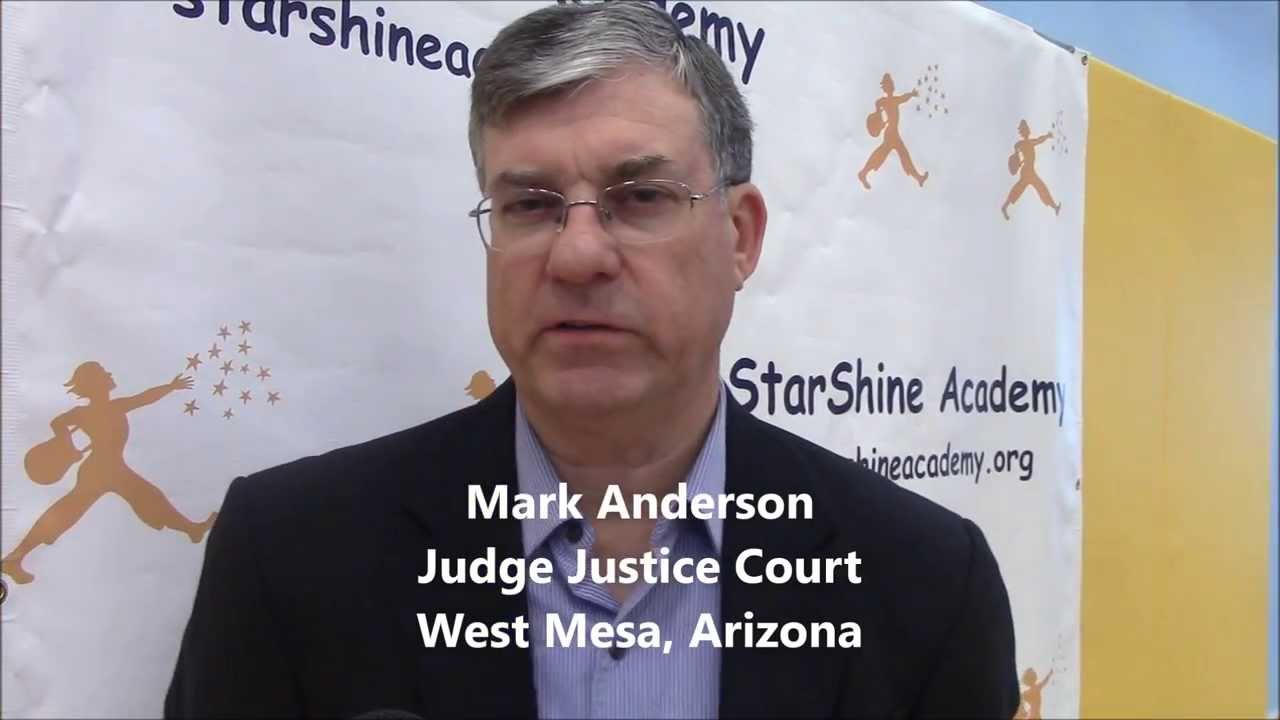
Hon. Mark Anderson
Politics and Religion
Podcast · Why I Joined (FFWPU) · 54:34 · USA
Projects by Hon. Mark
- Love People
Autobiography
In 1994, Mark was elected to the Arizona State Legislature where he served for 14 years. During his time in the legislature, he authored numerous significant and innovative pieces of legislation.
Hosts: What's your spiritual background? How were you raised?
Mark: I was a preacher's kid. My dad was a Presbyterian minister in several different locations, but mainly in Prescott, Arizona, where I grew up. Every Sunday I was in church, listening to my dad give sermons, going to Sunday school and church youth group on Sunday evenings. So I was very involved with the church when I was a kid.
Hosts: What was that like for you? What was your relationship with the church growing up as a pastor's son?
Mark: One thing I noticed is that often my dad would give a very passionate sermon, and then at the end people would leave, they would shake hands, and they would just go back to their normal lives. They would be making pot roast for lunch and watching football on TV. It seemed to me that there was a disconnect between what was being taught or preached and the way people responded to it. And it made me question — is there possibly something incorrect or not right about what's happening within Christianity?
Hosts: Did you see that in your own life?
Mark: Interestingly, I actually accepted Jesus as my personal Savior at the age of 16, in a different church — the Foursquare Gospel Church. So I came home and told my dad that I had become a Christian. That was the first shock, because he assumed that I already was one. So I started out my relationship with Jesus through the Foursquare Gospel Church, where there was speaking in tongues, there was healing, we would go out street witnessing. That was very different than the Presbyterian church that I grew up in.
Hosts: That's so fascinating to hear that kind of personal journey that led you to a closer, more personal relationship. What was your dad's reaction?
Mark: He was surprised. But he couldn't be disappointed that I had accepted Jesus as my personal Savior, because that's his life. That's what he believes incredibly strongly in. So it wasn't a bad surprise, but it was certainly a surprise.
Hosts: Was he sad to lose you from his congregation?
Mark: No, and I only stayed with the Foursquare Church for probably less than a year. The reason is that I would go to their service every Wednesday night — they had a Jubilee service. It was very exciting, the music was great, people were speaking in tongues. But there was basically one message, and that was, accept Jesus as your personal Savior. After a few weeks and months of hearing the same message over and over, you kind of wonder, okay, I've done that, now what? It was a little disconcerting that I couldn't find myself growing very much spiritually. So I eventually disconnected from the Foursquare Church.
Hosts: Where did you go from there?
Mark: I probably still went to church at the Presbyterian Church because I was expected to, being the son of the minister. But really, it became more of a personal journey, where I would be seeking my own personal relationship with God, not necessarily inside a church building, but out in nature, or in other settings where I was trying to find out the truth about Christianity. I felt like if it's really true, then I have to do something about it. Traditional Christianity teaches that you have a choice — you either accept Jesus and go to heaven, or you don't and you go to hell. And I realized that a lot of people are going to hell, including my best friend growing up, whose father was also a minister. But his father had divorced his mom, beat her up and ran off with another woman. So his view of Christianity was very different than mine. He was influenced heavily by what happened in his own family, and he became sort of an atheist. I used to envision the day when I would be up in heaven, because I had accepted Jesus, and I'd be looking down into hell and seeing my best friend being tortured for eternity because he made the wrong choice — even though I knew why he felt that way. Something was wrong with this whole picture.
Hosts: How did that make you feel, imagining that scenario between you and your friend? What kind of emotions were coming up for you?
Mark: The main emotion I had was that something was wrong, that this particular understanding of the world was lacking something. If God is a loving being, why would he sentence people to be tortured for eternity, as the Bible describes hell? Even we, if we have criminals — people that commit murders or rob banks — we might sentence them to prison for a certain period of time. But we don't torture them, and we don't sentence them to eternity for whatever mistakes they made. So I thought, God has to be more loving and more just than we are. If we don't even do that, why would he? It was a contradiction in my mind between what I understood God to be — a loving being who created us as his children — and what the Bible was saying he's going to do to everybody.
Hosts: So where did you go to search for answers to those questions?
Mark: Ironically, I went to the university in Flagstaff, Northern Arizona University, and I was a member of an organization called InterVarsity Christian Fellowship. I actually conducted Bible studies in my dorm room. People would ask me questions, because I'm the guy who's representing Christianity to them. I knew the pat answers that I was supposed to give, but they didn't satisfy me. So I searched outside traditional Christianity, primarily through prayer, and really trying to reach God and talk to God and say, what do you want me to know? In fact, this was probably the seminal point in my spiritual life. One night, I went out to the football field at the college, and I had a showdown prayer with God. I just said, God, tell me the truth. I don't care what price I have to pay. I just want to know the truth. That's it. I poured out my heart with every ounce of energy that I could muster. I concluded with the feeling, I've done everything I can. There's nothing else I can do. If God doesn't respond, that's it, I did my best. So a few months later, I ended up meeting people who I connected with, that actually led me to the answers to my quest. My prayer was answered a few months down the road.
Hosts: What was going on in your life in those few months between then?
Mark: It was my second year at the college. I was taking classes — I took skiing and volleyball and other very difficult classes. I was sitting in my dorm room, and it was the last day of school, and they were going to close the dorm. I thought to myself, I better decide what I'm going to do this summer, because they're going to lock the door. So I told God, I need an answer to what you want me to do this summer by four o'clock, because at four o'clock, I go down to the cafeteria. That's when they open it, and I eat dinner. At four o'clock, I opened the door, I looked down the stairs, and there was a girl. She was the former girlfriend of my former roommate from the year before, who had since moved to Wisconsin. So when I saw her, right at four o'clock, I said, that's it, I've got to go to Wisconsin. I called my friend in Wisconsin, I said, Roy, can I come out there? He said, yes, come on out, we'll get an apartment, you can get a job, it'll be great. Come on. So I went to Wisconsin. And that's where I met the people who introduced me to my current faith.
Hosts: Just out of curiosity, if you hadn't met those people at that particular time, what kind of trajectory did you see your life on at that point?
Mark: That's a really good question. I've often thought, what would my life have been had I not met my particular faith group, which ended up being a full-on commitment. I became a missionary for 12 years, full time, and since then have been very involved in our faith tradition. If I had not met them, I really don't know what I would have done. I didn't want to go back to college — I'd finished two years and I didn't see any classes that had any interest in taking. So I had already decided I wasn't going to go back to college, at least in the immediate future. I actually had a girlfriend, and we had a plan to meet in Europe and travel around Europe together. But instead, I met God. So my poor girlfriend was out of luck.
Hosts: How did she feel about you meeting God instead of Europe?
Mark: She ended up marrying a football player from our high school team, and I think she's had a really good life. So it worked out.
Hosts: That's great. You can't compete with God, right? What was that first meeting like when you first were introduced to Unificationism?
Mark: Interestingly, three days before I met someone from the Unification movement, I was at the lake in Madison, Wisconsin, at six o'clock in the morning, reading the Bible and praying, as was my habit. Suddenly, I felt an incredible presence. I felt almost high, and the words in the Bible actually came out of the page, and they were about the last days. After that spiritual experience, I went back up to our apartment, woke up my roommate, and I said, Roy, these are the last days. He said, it's six o'clock in the morning, I'm trying to sleep, why are you telling me this? So I started looking for signs of the Second Coming and of the last days in the newspaper and everywhere — I was thinking there's got to be some evidence of this. Three days later, I was walking down the street in the middle of the day, and two French girls came up to me and said, would you like some free ice cream?
Mark: It's definitely the last days when two French girls come and offer you ice cream. This does not normally happen to me. I said, well, maybe — why don't you give me the address, because I had to go pick up my roommate, and we'll probably come over. Sounds good. So I picked up Roy, and I said, hey, we can get some free ice cream, if you want. He said, sure. So we went there, and we were eating our free ice cream. All of a sudden, a small Japanese man came out and started drawing circles on a chalkboard, and he was saying, sinless Messiah. I said, who is this guy? He looks like a minister. They said, it's Reverend Sudo. And that was the beginning of my journey into the teachings of the Unification movement.
Hosts: Into the sinless Messiah. Wow. So did you sit through a lecture? Did your roommate stay with you?
Mark: Yeah. We were both Christians. We listened to the introductory lecture. Sounded very interesting. But what was probably more interesting was the people who were there. It was what they called an International One World Crusade team. So it had people from Europe, Japan, Korea, America. It was an incredibly diverse group of people. They said, well, if this is interesting, why don't you come to our two-day workshop this weekend? So we said, okay, we can do that. We decided to attend the two-day workshop, and we were listening to the lectures and very fascinated by them. Some we didn't agree with, like the Fall of Man — we thought that was not right. But some of them, when we heard the Parallels of History lecture, that one really struck us both, because we had a background in Bible history. It made a very deep impression on us. We were invited to come to the seven-day workshop, which happened to be starting the next day. Unfortunately, my roommate had to work. I had quit my job — I was actually a 19-year-old vacuum cleaner salesman with long hair down to my shoulders, if you can imagine such a thing. People do not generally buy vacuum cleaners from 19-year-olds with long hair. Something doesn't fit. So I wasn't a very successful one. I quit that job, so I had the time. I went to the seven-day workshop and he did not.
Hosts: I just want to note for our listeners, for people who are unfamiliar with the content they share at these workshops, it's basically a breakdown of each chapter from the Divine Principle. So the Fall of Man, Parallels of History — these are all chapters from the Divine Principle. I'm curious, what was it that made you so interested to continue on to the seven-day workshop?
Mark: I think it was a combination of the topics and the way they were presented that was very interesting to me, and the feeling that I received from the other members who were there inviting people. For example, one of the French girls who invited me — when we were going to leave because my friend had to leave to go to work the next day and we only had one car — we went outside and she came out and said, oh, are you guys leaving? Yes, Roy has to go to work, so we're leaving. I was looking at my friend Roy and looking at her, looking at Roy, looking at her, and I felt so much love coming from her. So I said, Roy, I'll see you later. He left, and I stayed. So it was the topics, but it was also the love that I felt at that time.
Hosts: When you say love, can you describe that for us?
Mark: It was not anything romantic, of course, but more just a general feeling of regard and care. That's something that is not found easily in this world — people who are very sincere and are able to express that to you. I think I was attracted to that as well as the actual content.
Hosts: I think we can all do with a little more of that kind of interaction, right? So after the seven days, what happened next?
Mark: I decided that this is where God wanted me to be. I had asked God before, show me the truth and what you want me to do. So I got the answer. It was clear to me that this is the direction I needed to go, for now anyway. So I decided to join the group. I cut my hair, which literally was down to my shoulders — I cut it to about where it is now. I went to Roy and said, Roy, you can have the car, you can have whatever small belongings I had, but I'm going to move in with these people and I'm going to follow this group and see where it leads. Needless to say, Roy was kind of shocked that I would do something that radical, if you will. But it seemed like the right thing to do at the time.
Hosts: What year was that?
Mark: 1974.
Hosts: Wow. And how old were you at the time?
Mark: Nineteen.
Hosts: Would it be accurate to say that from your earlier childhood experience and what you were really searching for, it sounded like more of a sense of empowerment to participate in God's will? When you met the Unification movement and heard those teachings, would it be accurate to describe it like that — that that was what you found? Or what was it particularly that resonated the most for you at that time?
Mark: I think what resonated for me was the fact that the teaching was so clear and it answered my question so completely, and I could see that the people involved also felt committed to what they were trying to accomplish. It appealed to me as an opportunity to work with other people to make the world better. As a fundamentalist Christian, I envisioned that at the time of the Second Coming of Christ — which most people understand is going to be a very dramatic time of massive change to the world — I expected this kind of massive change to take place in a matter of weeks, maybe months at the most. So of course, I wanted to be a part of it. And of course, 48 years later, I'm still here and the world hasn't massively changed like I expected it to. But along the way, I've learned a lot of valuable things.
Hosts: What's been the most impactful time in those 48 years in the church for you?
Mark: I've had quite a few amazing experiences. Some of them are what you would classify as spiritual experiences. Others are just amazing growth in terms of my ability to relate with people and to experience the joy of serving and being a sort of person that God could use. There's nothing more satisfying than feeling like God is using you to do something. I've had that experience on a number of occasions. If I had to choose one, I would say being in the Arizona State Legislature as an elected official and being able to accomplish the things that I did, and being able to interact with people on that level and practice and use what I had learned as a younger person in a very real-world situation where, frankly, a lot of good can be done. Now, it isn't always done, and nowadays it's very rarely done in terms of elected officials making a positive difference in the world. But in my situation, I was very fortunate to be able to do that, and to have the feeling that what I'm doing is actually helping literally thousands and thousands of people in my state.
Hosts: That's fascinating, because I think a lot of people wouldn't really look at a political career as a way to really serve God, or definitely serve other people. But the way that you felt that you were being an instrument of God's will in that place — I think that's really interesting. Could you share what is one of the things that you're most proud of in your work with the legislature?
Mark: Sure. The first one that comes to mind is a piece of legislation I authored called the Charity Tax Credit. The way it works is you donate to a charity that's helping low-income people. It could be the Salvation Army, it could be any charity that is helping people. And you get a 100% tax credit for your donation up to a certain amount — in this case, I think $400, $800 per couple. What it means is you're really directing your tax dollars to a non-profit organization that you believe in. So my question to people is always, would you rather give $400 to the state government to filter down through some process to eventually reach some organization to help people? Or would you rather give it to a non-profit in your neighborhood that you know is really helping people make a significant positive change in their lives? That's really what it allowed people to do. Since that time, definitely tens of millions, probably over 100 million dollars, have gone to organizations — many of them faith-based organizations — committed to helping low-income people. We are the only state that has this Charity Tax Credit.
Hosts: And this is the state of Arizona?
Mark: Arizona. Yes. That's one example. I could keep on going if you want.
Hosts: What would you say is the spiritual motivation for that piece of legislation?
Mark: The motivation is really to help people with their lives. So many people are struggling. Our society has safety nets and different things that we try to put in place to protect people and help them from falling through the cracks, so to speak. But sometimes they're not very effective or well-managed. Government programs don't always do the best job. Sometimes, not always, but sometimes the non-profit sector and people who are doing things out of their love rather than because it's their job, can do a better job of helping someone who's down and out. I'm motivated by other people's suffering and having a desire to end that suffering and make their life better, or give them a chance to make their life better. So that's most of the legislation that I worked on.
Mark: Another one I could bring up — I was chairing a committee on homelessness, and a woman came up and testified in the committee and said, well, I work at the homeless shelter, and every week a van pulls up and a couple of people are kicked out and the van drives off. The people that are kicked out of the van are people getting out of prison. They give them $50 and they give them an ID that says “Offender” in big red letters. So the prisoner gets out of the van, and he looks on that corner and sees a drug dealer, and on that corner he sees a prostitute, and pretty soon his $50 is gone. Then he goes into the homeless shelter, and now he's there. That was our transition program for how we get people out of prison to be successful on the outside. Obviously not a very good way to do it. So I worked with all the stakeholders for two years to develop and design a transition program so that prisoners, before they get out, can start taking advantage of things like drug treatment, education, literacy, whatever they need to make it and be successful on the outside, including being reunited with their family. No one was doing that. When that legislation passed, it created a program that has been very successful in reducing recidivism, because people can now get out with a plan, with people to help support them, with skills they need to be successful in a job. So that's another example of something that nobody was doing. I was glad I could do that and make a difference for those people.
Hosts: Wow. That's a real testament to how you can make your faith concrete, give back in a real way. You said you're affected by the suffering of others and you feel that deeply. Was there ever a time in your journey — we talked about the most impactful time — was there ever a low point in your life of faith?
Mark: I've had a low point, not so much in my life of faith, but in 2020 and 2021, I had two years of significantly challenging health problems that I'd never had before. I took my health for granted. I had perfect health until I was 65, and then COVID came along. I don't really want to go into all the details because I could talk to you for two hours just about that. But suffice it to say, I had very traumatic experiences with kidney stones, with insomnia, with anxiety, with all kinds of things that I never experienced before. That's when I also became more aware of other people's suffering. Because before that — I mean, of course, you see people and you know people are suffering, but now I really experience more empathy for people who have those kinds of physical struggles and challenges. I feel like maybe the next chapter is going to be somehow finding a way to help people who are getting up in years, facing these kinds of physical challenges, and how can you handle it mentally. I'm not a doctor, but I went through a lot these last two years. It was not fun.
Hosts: I'm sorry, that was so tough for you. I'm curious, because it sounds pretty apparent that you really care about the welfare of your fellow man. Even before your health struggles, that was very clear in what you've shared with us so far. It's interesting that you mentioned feeling that more acutely after struggling with your health. It's a long story as well, and we're saving this for definitely another episode, but my sister also had a deeply profound — she describes it as a spiritual awakening — because of health issues that she struggled through. So I guess, is there anything that stands out to you in terms of the suffering of others more than from before? Is there something that's a more acute experience or observation that you feel now from what you've been through with your health?
Mark: It's interesting because actually right now, I'm working on the question of God's inability to address the suffering of humanity. I start with one premise, which I came to during these two years, because when I was going through unbelievable stuff, I had to talk to God and say, hey, why is this happening to me? I had to somehow find peace knowing that this was happening. I never imagined this would happen. So I settled on one premise: that God is the loving parent of all mankind. That's where I start. Based on that, I tried to figure out, okay, if you're the loving parent and your child is suffering and going through some incredible suffering, you want to help, you want it to stop. But you may not have the ability to stop it or to help them. It may be beyond your capability if they're in prison somewhere. So I feel like that's what I'm struggling with right now — why is God unable to solve the incredible suffering on our planet, the atrocities that are happening, even as you and I are sitting here? People are being — I don't even want to go into it. But I think you can imagine the kind of suffering that's happening in our world today. So I'm trying to digest that and understand why that is, and why it continues, in spite of the fact that the Creator of the universe, we thought, had the ability and the power to change all that.
Hosts: It's interesting because when you first said God's inability, I thought, oh, there's some people that are going to be like, God is unable to do anything? That's blasphemous. I could just picture it in my head. I think that as Unificationists, we have a very unique perspective on God as a being and who he is as our Creator. The conventional idea of him is that he's all-powerful and can do anything and everything. So could you maybe explain a little bit about what you mean by God's inability? Because I do think that's a really powerful concept that we offer to people. And it points straight to, I'm sure, going all the way back to the lectures that you first heard, right?
Mark: Well, it's interesting — no, I can't offer a very deep, profound, and totally consistent explanation of that, unfortunately. I'm still working it out myself. In fact, the older I get, I actually have more questions, not less. So I'm working on that question. But I can't be totally consumed with it, because to me it's more important that I act on what I do know and not on what I don't know. What I do know is that I have some amount of time left on the earth, and during that time, I want to do as much good as I can. I may be able to do a lot, I may not — there's a lot of factors out there. But that's what I find the most rewarding.
Mark: When I was a judge, for example, I looked at the people who came in front of me in court as God's sons and daughters. They're people. They may have made mistakes, but they're struggling. They need help. They don't need me to tell them how bad they are — they already know that. They know that they're not what they want to be. But they need help. So I created a program, a life-skills program. For many people, I would say, look, you can either pay this fine or you can attend this life-skills program. I'm giving you the choice as your sort of punishment for whatever crime it was. People would often choose that because it seemed like a good choice at the time — they had no money. But the life-skills program really helped a lot of them to understand why they made the choices they did. There was some content about trauma, and when you're a child and how that affects you and how you have triggers and how to manage those triggers — a lot of stuff that they could actually use in the course of their lives that would prevent them from appearing again in my court for another mistake. So I feel like there's a lot to be done in terms of helping people get control of their lives and be more successful as people and have better relationships with others and better families. There's a lot of education out there that we don't provide as a society, and people have to find it some other way.
Hosts: That's a powerful point you shared about doing what you can within your control. You're grappling with, like you said, more and more questions. The older you get, the more life experience you have — I'm definitely struggling with that now. It's easy to fall into the narrative of being angry at God — why aren't you doing more? Why is there still suffering? Not saying those aren't valid questions, but what can you do about it within your realm of influence, with your talents, with your faith? I also really like how you talked about working in the court and approaching it from a parent's heart perspective, because we look at the flaws of the judicial system and it's really easy to point at all of the holes. But the standpoint of where we're coming from really informs how we can help others in many ways, right? What you were sharing kind of reminded me of Brené Brown talking about her research into how shame drives so many bad decisions and creates more fear for everybody. I love that approach of really looking at other people as, if I was their parent, what would I want? To empower them — rather than being punitive, I guess.
Mark: It makes sense from a lot of different points of view. One being, if you can help somebody actually become a successful person — when I say successful, I mean be able to support themselves and engage in society in a positive way — as opposed to being punitive and saying, okay, I'm sentencing you to X amount of time in jail or whatever, and they don't get any better and they come out, then guess what? They're going to commit more crimes, and you have to have more police, and all that costs money and costs society. So it's actually foolish to think that just being punitive itself is going to actually accomplish anything, really.
Hosts: I'm also curious, how has your spiritual journey informed your perspective on bipartisanship? A lot of people look at politics these days and feel like the country is divided — people are more divided than ever before, or at least that's the feeling I really get when I watch the news or talk to other people. What was that like for you and how did your spiritual journey inform your perspective or your approach to that?
Mark: When I was in the legislature, it was '94 to 2008. Things were still pretty good in terms of relationships between the parties. I remember some elder members of the other party who were — we were in power, so to speak, we had the majority — but they were treated with respect, and they had the opportunity to have input on policy. There was a mutual respect across the aisle. That got worse and worse as time went on, to where — that's one reason why I left the legislature in 2008. It was not as enjoyable a place to work because of the extreme partisanship, and today I would not really want to be there for that simple reason, that it's become almost impossible to have a conversation with someone from the other party. That's why nothing is getting done, and it's unfortunate. I would hope that there'll be a reaction to that, and I think there are things happening around the country in response. In some places they're going to something called ranked-choice voting, which I'm not going to spend the time to explain, but the result is that you have more moderate people actually getting elected — people who are more likely to want to compromise and work together. Another example is an organization called Braver Angels, which if you've not heard of it, you might want to look into, because they have a communication methodology that allows people with opposite viewpoints to actually hear each other. I've participated in a few of those, and they're very good and becoming very popular, because people are reacting to the extreme partisanship and realizing it's not healthy. We have to do something about this. So I have hope that things will eventually come back. It's like a pendulum — it swings, they'll come back to the middle, and there'll be more reasonable people leading us.
Hosts: You talked about how your time in the legislature and your early days in the movement inspired you. What does faith and spirituality look like for you now, and what keeps you inspired?
Mark: At my age, you spend some time looking back over the course of your life. I've been on this journey of being a part of this particular faith tradition for 48 years, and I have to say that I feel very grateful that I was able to be a part of it and that I have met so many wonderful people. I've had so many incredible experiences over the years that I realized I was very fortunate and blessed to have this as kind of the central theme of my life, if you will. Even though the expectations that I had at the beginning have not been realized, and there's been a lot of heartbreak along the way with the next generations and a lot of other issues — but overall, I'm very grateful, and I'm a lot better person than I would have been had I not participated in this movement, because of the worldview that everybody is God's child and that God is the loving parent of all mankind. Therefore, we have to create a world where that is the reality. We're not there yet — we're a long ways off. But just having that as a vision, as a goal, as a North Star, if you will, is a blessing. I feel very lucky to be where I'm at right now. I've been blessed also with a beautiful wife, children, and now my grandchildren. My oldest is 18 years old and the youngest is two, and she was here today. That makes my life very rich. The friendships that I've had now for 40-some years are very close, and we get together and it's very meaningful. So I consider myself very lucky.
Hosts: I'm curious — how does your family play a part in your faith as well? As an organization, our official name is Family Federation for World Peace and Unification, right? So what does that look like or how does that play out in your life?
Mark: When you say family, do you mean my wife and children, or my parents and brothers and sisters, or both?
Hosts: I guess what stands out most to you when you hear that question?
Mark: My father passed away a number of years ago. My mom is 91 and she lives two hours from here, so we go up and see her quite often. My brothers live in different places and we get along fine. My wife has always been very supportive of me and helped with our life together, doing incredible things that had she not been there, I don't know what would have happened. And of course I love my children, and they're amazing people. They didn't necessarily all follow how I envisioned for them to go, so I've come to accept that for sure and support them. And the grandchildren — they're growing up in this age with technology, and I kind of feel sorry for them. It's just not the kind of world I'd want to grow up in. But they'll be fine, I'm sure. I'm going to help them as much as I can. So my family is very important. Very important.
Hosts: That's so nice to hear. One more question, and I think this is my personal favorite question to ask people — what keeps you inspired? Are there things that you read or listen to or watch that give you fresh perspective on your faith journey? What keeps you inspired just in your day to day?
Mark: I think probably for me, it's my own personal interaction with God directly. After what I went through the last few years, I wake up every day and I say, I'm so grateful that I got a good sleep last night. I had insomnia for eight months. And that is horrific when you can't sleep. So that starts my day by saying thank you that I had a good sleep last night, because I'm finally over it. Gratitude is what keeps me going. Gratitude. And I try to be loving to everybody I meet, everybody I know. There are members of our community here who are really struggling for a lot of different reasons, and I try to help them. That's what motivates me every day. I realize how our time here is limited, and so I want to make the most of it, and I have that opportunity. I could be gone by now — not here. So every day is a blessing.
Hosts: I love that answer. Thank you for sharing that. I think us youngers can also learn from that perspective. Sometimes we get stuck in the trap that we have more time, we can figure it out, but life is limited. Thank you so much, Mark. This has been incredible to hear your journey and for sharing it with our audience. We appreciate your time and for sharing your wisdom with us. I know that personally, I got a lot out of this — a lot of takeaways.
Mark: For sure. Well, if you want the full story, you can always read my book. So shameless —
Hosts: No, plug away, please.
Mark: Well, thanks for doing this. I think it's a great project, and I would love to hear other people's stories and what they went through and what they're doing. It's fantastic.
Reflections about this person
Reflections are anonymous unless you put your name in. Every submission is reviewed before it appears.
Loading reflections…