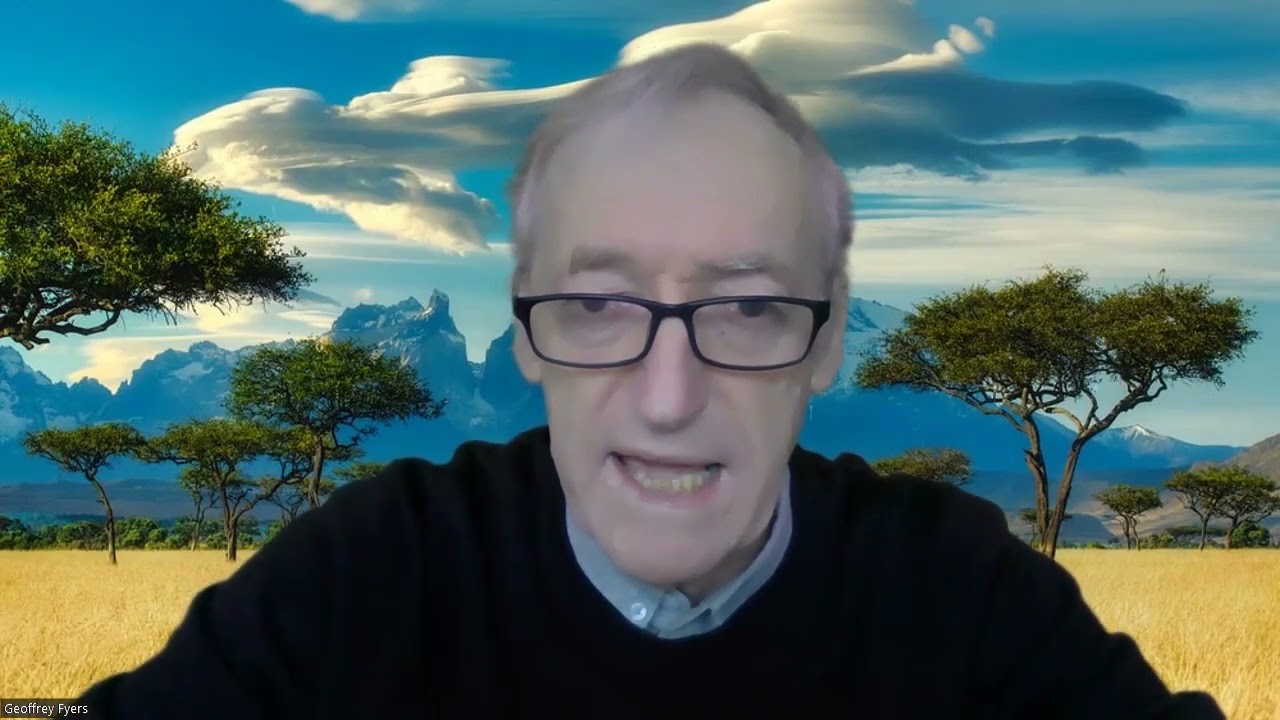
Geoff Fyers
Geoff Fyers Testimony to Japanese members
YouTube · Family Federation Report · 9:26 · New Zealand
Geoff Fyers, a New Zealand farmer turned Unification missionary, describes 15 years building agricultural, medical, and industrial projects in Zambia funded by Japanese members, and appeals against Japanese persecution of the movement.
Good afternoon, good morning, good evening. My name is Geoff Fyers. I'm a New Zealander. I joined the Unification Movement 45 years ago, in 1977. I come from a farming family in New Zealand, and in 1983 I was asked if I'd like to go to Zambia to set up an agricultural school. I arrived in Zambia in May 1983, to find 30 students and a classroom waiting for me, expecting me to pass on all the knowledge and skills I'd built up over many years of farming.
I also found a huge meat factory that had been established by the Unification Movement, built with money sent from Unificationists in Japan. A medical clinic was under construction, and a medical team had just arrived with a Japanese surgeon and supporting staff. The beginnings of a primary and secondary school were also being put in place. I'd thought I would stay one or two years, but as I invested myself in the school project, I became increasingly inspired and amazed.
The projects were continually supported by money sent from Japan — a wealthy and prosperous nation. I felt this was a very wise endeavor — channeling funds from Japan not just through government, but through grassroots activities where people directly benefited. After teaching for a year, I advised the organization that we needed a farm where I could take students for practical, hands-on training. More money was sent, and a 7,000-acre property was purchased, where I brought students for a grassroots understanding of farm development.
This is a remarkable story, and I feel the people of Japan should come to know it, because at the moment there is great persecution rooted in misunderstanding about where the money raised by Japanese Unificationists went. The Zambia project I'm describing is only one country. These projects have continued all around the world, in many African nations. Students came not only from Zambia, but eventually from Cameroon, Uganda, the Congo, and others.
Many students also went to the meat factory to learn meat production, hygiene, and preservation — all practical skills young Africans could use to help develop their nations. Some of you may also know of Tongil Industries — a Korean company that builds industrial machinery for fundamental industrial development. Five or more of those large lathe machines, built in Korea, were sent to Zambia to set up an engineering company supporting grassroots industrial growth.
I'm greatly disturbed by all the negativity directed at the Unification Movement, particularly stemming from the money donated by the mother of the young man who assassinated Shinzo Abe. She herself understood the value and importance of contributing to this movement, and so did Shinzo Abe himself. His father and grandfather could also see the great vision the Unification Movement carries. The Unification Movement is a spiritual movement, and religious movements have always donated money to their organizations, and encouraged the transfer of wealth from rich nations to poverty-stricken ones. There's nothing new or unusual about that.
Japanese members came to Zambia through the Unification Movement, and even during the AIDS epidemic that broke out in Zambia, Japanese women came with funding, and we held conferences. I personally went from school to school teaching about AIDS, making young people aware of how it is contracted, and how it can be avoided. There are many amazing activities the Unification Movement has undertaken across many fields.
After my 15 years of work in Zambia, I brought my family back to New Zealand for their education. A few years later I volunteered to go to Palau, to help set up a character-building curriculum in schools, teaching soccer, and finding healthy occupations for island children to mentor them into a better lifestyle. Even island nations have huge problems with alcoholism and drug abuse, and young people there need to be engaged. I spent six years in Palau. I mention this because I was supported there by Japanese Unificationists. Japanese members also came to Palau to help with education programs, visiting township after township to speak with women's groups, and even political leaders, offering insights on how to build their nation.
Nations are not built only by material things. They are built by good moral and ethical understanding of how to use those material things for the benefit of the people. One of the things I've learned is that nations are built not just by smart people, or by material resources, but by ethical and moral people. That's what New Zealand was built on. Africa has huge resources — so why has it not developed? Sometimes it has not benefited from the moral education contained in our great faiths. Confucianism, Shintoism, and others — all carry the discipline we need to build strong nations, and a strong family culture.
So I want to appeal to the Japanese people: please recognize the tremendous work the Unification Movement has done around the world, for the benefit of other nations beyond Japan itself — a hugely wealthy country with tremendous skills and discipline that others can benefit from. The mentoring and the sacrificial life of Japanese members has made a real difference. With this, I thank you for your time in hearing my side of the story, about where so much of the money raised by Japanese members of the Unification Movement has gone.
Reflections about this person
Reflections are anonymous unless you put your name in. Every submission is reviewed before it appears.
Loading reflections…