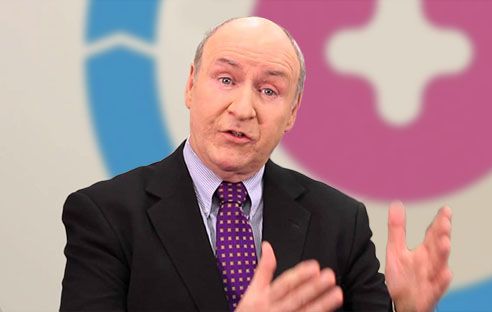
Dr. Thomas Ward
Leftist to Unificationist
Podcast · Why I Joined (FFWPU) · 48:59 · USA
Thomas Ward, former President of the Unification Theological Seminary in New York City and Professor of Peace and Development since the summer of 2019.
Hosts: So thank you so much, Dr. Ward, for coming on the show. We're so excited to have you. As a seminary student myself attending UTS, I have to say that every time I have a conversation with you, you have such fascinating stories from your life experience. So I'm really excited to hear from you. How was it that you met this movement?
Thomas: Well, thank you very much, Nancy and Sungmi. By the way, both of you are Unification Theological Seminarians, and we feel very lucky to have you. Let me just say that, first of all. I'd like to share a little bit about my life trajectory, by starting by saying something about my background and where I think I basically was prepared to encounter this movement and somehow be able to resonate with it.
Thomas: I grew up in western Pennsylvania, actually very close to Pittsburgh. I was born in the city of Pittsburgh, but I grew up in the suburbs. And there are turning points in everyone's life. I think that my first turning point was probably when I was about three years old. I just remember coming into my home, and my mother was making sauerkraut, which we had occasionally. And on that particular day, I don't know why, but I became very, very sick as soon as I came in. And I began to throw up blood.
Thomas: No one knew what to do. So I was taken to a local hospital, and our physician took time with me, but he didn't know what it was either. Fortunately, there was one medical doctor — I still remember his name, Dr. Lauder. He somehow figured out that I had a duodenal bleeding ulcer. I had several attacks with that problem as a young person at the age of three and at the age of five. But when those things happen, particularly when nobody knows what it is at first, you end up getting a lot of attention, and you feel special.
Thomas: I still remember back then that all of the Pittsburgh Steelers heard about my story because my aunt worked very closely with the coach of the Pittsburgh Steelers. And all of them signed a football for me, and they brought it to me. So I'm a Steelers fan for life.
Thomas: I was a good student, and I did well all the way through my grade school. But in ninth grade, I was sent to a prep school. It was called North Catholic Preparatory School in Pittsburgh. It's a very excellent school. And I went there, and for the first time in my life — I still remember my first report card — I got an F in Latin, I got a D in Algebra, and I got Cs in everything else. And I was stunned. My whole year, it was not a stellar year. And my mother was so disappointed with me that she took me out of that school, and she put me in the local public school.
Thomas: It was interesting because I changed in that high school. My parents didn't understand it at that point, but I had changed. It was only at the end of the year when one of my teachers — I still remember him, his name was Ray Delilo — came in and explained to us about how he studied. He said that every day, he knew he was not a strong student. He went to class, he took notes in class every day, he went home, and he recopied all of his notes, and he underlined in red the important points. Then he started at the beginning of all the lectures from every class. He started from lecture number one, and every night he went from lecture number one to the most recent lecture. He said he did it day after day, and as a consequence of that, the things that he studied still were with him. And I just decided, I'm going to do that.
Thomas: So I went to this public school, and suddenly I became a very good student because of this practice. And people were impressed by the fact I had somehow become very committed, and I really knew my stuff. I went through my high school years. I had some remarkable experiences. One of them was I got into acting. I'm not a good actor, but I did get into acting at that time. And as a junior in high school, I played Hamlet. Actually, only Act III. I don't want to boast too much. But it was a very successful play, and lots of word got out about the play, and I kind of became a celebrity. So everything changed, and I was elected the president of my school, and everything turned around.
Thomas: Then it came time for me to decide to go to university. My grades, my SAT scores, my student activities meant that I could probably get into a pretty good school. I still remember visiting a number of the Ivy League schools, but long story short, I ended up going to the University of Notre Dame for my studies. And it was not what I expected because it was quite a religious school. But the interesting thing about the school was that all the kids who had done so well in that prep school, many of them were in that school. And among them, I was the best student. Somehow, because of that change that had occurred.
Thomas: And this was a very changing time in the United States. It was the years of the Vietnam War. Just to give you an idea of how Notre Dame changed during my four years: my first year there, Notre Dame's man of the year was General Westmoreland, William Westmoreland, who was the head of the U.S. troops in Vietnam. When I graduated as a senior, the man of the year was Senator Eugene McCarthy, the biggest opponent to the war in Vietnam at that time, who also tried to become President of the United States. So the whole complexion of society changed during that time.
Thomas: I became very active politically. We had lots of demonstrations and sit-ins and traveled to Washington, D.C. to demonstrate. I also made a strong commitment at that time in my life that I was not going to go to Vietnam. At that time, the decision about whether you did or did not go to Vietnam was decided based upon a lottery, which took place in December of 1969. So if your number was between 1 and 120, meaning it was based on your birthday, it meant you were absolutely going to Vietnam or going to the military. If your number was 120 to 240, it was not clear. And if it was above 240, you weren't going. I was 5.
Thomas: So I had to make a decision. I basically had one of two choices. My choice number one was that I would go to jail. I didn't really want to go to jail. I don't know if I could have done that. But between Vietnam and jail, I would have gone to jail. The other choice was I could go to France, where I had spent a year of my studies. I could go back there. And I kind of decided that I would go to France. That was my decision.
Thomas: But before that, there was a physical. Everybody has to go through a physical. I still remember the night before going in for that physical, I prayed, which I never did. At Notre Dame, I prayed in the chapel in the hall that I lived in. And I didn't pray about please get me out of the military. I guess I had an experience of God. I was just praying and thinking about suffering and circumstances in the world and the war. My prayer was about that. It wasn't please get me out.
Thomas: The next day, I went to the draft board and I had my physical and just flew through everything. At the end, the medical doctor said to me, “Do you have any reason, any health issue at all that would preclude you from serving in the military?” And I said, “Well, as a young child, several times, I had a bleeding ulcer, a duodenal bleeding ulcer.” He looked at me and he said, “As a young child — that's not going to get you out of the military.” And he said, “Wait a second.” He stepped out of the office and he walked up and down the hallway a few times. He came back in and he took my paper and he wrote on it DQ, disqualified. So my rating was 4F. 4F means you can never be called to the military.
Thomas: I was stunned that this had happened, but it had happened. I walked out of the draft board that day and I heard like a voice. The voice said, “I'm giving you this, but later I'm going to ask something much more from you.” So I felt really clearly that something had happened.
Thomas: I remember going back to Notre Dame. We were required to take two religion classes at Notre Dame. Honestly, it was horrible that poor people had to teach us, because people didn't believe. They were just there. I remember that particularly in my senior year, I had a nun who taught us this one course. Nobody took it seriously. The challenges to her were just incredible because nobody believed. And for some reason, I ended up walking with her around the campus at some point. I shared about my experience, what had happened to me. And as I shared with her, suddenly I just began to weep. As I said, I didn't have a clear understanding or appreciation of God at that point. But what I said was that I had experienced universal guilt. I described my experience as universal guilt. That's how I characterized it.
Thomas: I finished my last year at Notre Dame. At the end of that time, there was a graduation. And I decided I can't go to graduation. Honestly, with the world the way that it is, I can't participate in that. So I broke the heart of my parents because they came out and they were all excited about me participating. I said, “Mom and Dad, I'm sorry, I can't do this.” They understood, and we did not do the graduation. I was very upset with the system at that time. I thought, why is this war? The war made no sense. Basically, Richard Nixon was saying, we're fighting this war in Vietnam for the sake of democracy. Now, if the people in Vietnam, if they want to have a communist government, if they vote for that, they can have it. But what are we doing? It's obvious that many people want this. Why do we have to fight so that they can have an election? It made no sense to me at all.
Thomas: My tendency at that time was to go to law school, but I decided I can't go to law school. I have to really do something. I got to figure out what it is, but I have to do something. And I went back to France. Before going back to France, I needed to make money. Now, you're going to think I'm a terrible person when I tell you this story. Before going back to France, I had choices. I could work like in a department store or something. Then I thought, no, what I really should do is go and apply for a job and make a lot of money and make a bunch of promises to people about what I'm going to do, and then walk flat out on them at the right time. So that's what I did.
Thomas: I was hired by — maybe you all know PNC. It's a big bank. At that time, there was another branch that later became part of PNC that I worked for in Pittsburgh. I was working in the area of international affairs for the bank, and I did risk analysis. I did political risk, economic risk, and credit risk, because the bank was lending out money to countries all around the world. That's basically what they did at that time. And I was 21 years old. I had my own office. I had my own secretary. I had a very nice position in this bank. Many people wanted that position, but they couldn't get it because they didn't have the language skills that I had. I was able to read — we had German and French and Portuguese and Spanish. I was able to do all the work and then translate things and analyze them and make recommendations.
Hosts: Can I ask, how many languages do you speak?
Thomas: I want to be honest, not humble. I speak well French, English, and Spanish. I understand everything in Brazilian Portuguese. I certainly can read it. I also can read German pretty well. I can read Russian, but I need to work with the dictionary. And I also can read Korean. I spent a year in Japan, so I speak quite a bit of Japanese, but I don't read it very well. Well, I just was at it at that point, during my early years in the church and before I did those things.
Thomas: So I was there and I went ahead with my plan. I worked. I even asked them for a raise. Talk about terrible — not that I wanted the money. I just saw them as these greedy capitalists and I asked them for a raise. My boss said to me, “I don't like you doing this. What I really want you to do is I'm going to give you a week off, and just go out and look for a job someplace else and see if you can do better than what we've done for you.” But the boss above him said, “No, just give him the raise.” So they just let me go through.
Thomas: About three or four months later, I went to them. Part of it was sparked because they put a loan on my desk and it was a loan to South Africa, which was completely dominated by apartheid at that time. And I thought, this is it. I just went into my boss and I said, “I'm sorry, I'm done.” And he said, “What do you want, more money? Is that what it is?” I said, “No, I'm done. I can't do this. This is not a life.” He said, “Well, you can't just say this to me. You have to go and tell the top boss about this.”
Thomas: Now, my top boss, believe it or not, was 28 years old. He was the vice president of the bank already. And he had five kids, a Georgetown graduate. He was a very talented person. So I came in and I said to him, “I'm leaving.” And he said, “Why are you leaving?” I said, “There has to be more to life than this. I can't just do this. It doesn't make sense to me. I need to look and see if I can find other things. And I'm planning to go back to France.” And he said to me, “I have five children. I have a lot of commitments and responsibilities. But if I was in your situation, I would do the same thing that you're doing. So go out there and see if you find something. And if you don't find anything, then come back here. And if at all possible, I'll give you back your job.”
Thomas: That blew my concept about the capitalist world. I realized things are not that simple. It's not a matter of an economic system. No matter what you wanted to say, he was a good person. And most of the people that I worked with there were good people. I still remember that I'd been there for about a year, and they had a celebration for me when I left. They bought me these bookends, which I still have. I keep them to remind me the world is not simple.
Thomas: So I realized after that life is not simple. By the time I left there and I headed off to France, I knew things are not as easily explained as I thought. At some point I understood that in the world, there's an invisible problem that no one knows about. There's something wrong with the world that no one knows about. I thought, for example, I could become a professor. But by becoming a professor, then I go into a university — and the wealthy universities like Notre Dame, you'd go there and you have Dow Chemical giving all kinds of money to the university, recruiting students, and Dow Chemical was producing napalm, which they were dropping in Vietnam. So I thought, you can't get out. It's a vicious circle. The whole system is all tied together and it doesn't matter what you do. You're still a part of this vicious circle.
Thomas: So I worked in this bank. I made enough money not to have to work for five years. And I wanted to use that time to really search, to study and to write. I wrote some things which were pretty strange. I still have those writings. One was about a person who lived their whole life, and at the end of their life, they died and they went before God and God condemned this person to hell. And the person refused to go. The reason was, “Well, how can you send me to hell? You're the one that created all this. You're responsible for this, not me. Why are you blaming me for this?” Yeah, I was an angry young man. Angry at the system, angry at religion, angry at everything.
Hosts: I think many people today can relate to that experience.
Thomas: So that was kind of where I was. I went to France and I met my spiritual father there, actually very shortly after getting there. My spiritual father is Claude Perrottet.
Hosts: Can you explain the term spiritual father just for some of our guests who might not be familiar with that terminology?
Thomas: Yes. That's the person who first introduced me to the teachings of Reverend Moon. I refer to that person as my spiritual father. So his name is Claude Perrottet. He's also an academic, by the way. We knew each other for a few months and he didn't speak to me at all about the church. He met the church in 1970, but he had not joined yet. He'd made the commitment — when we met, he'd already decided he was going to become a church member. But he didn't tell me that right away.
Thomas: Then one day, just out of nowhere, he decided to move into the church. And he said to me, “This is very hard for me to say to you. But I met a movement which has changed my life. They use a bunch of terms which are going to be very hard for you to accept. They talk about God. They talk about Satan. They talk about Adam and Eve — a bunch of very unusual concepts. But they've taken on a whole different meaning for me.” And he invited me to come to a lecture.
Thomas: I came to the lecture. Honestly, I was not open-minded. My feeling was, he's weak. He may need a crutch like this, but I don't. So I heard the Principle. I heard chapter one. I still remember that at the end I just got into some kind of strange philosophical discussion which really showed I hadn't got the point of the lecture. But then they invited me to come back.
Thomas: When I came back, the second time they started to talk about the fall of man and Adam and Eve. And I said, “Adam and Eve? What are you talking about? You believe in Adam and Eve?” At that time in the Roman Catholic tradition, you had several major theologians such as Teilhard de Chardin and Karl Rahner. And among educated Catholics, the idea that there was an Adam and Eve, that was myth. And so here was someone talking to me about a literal Adam and Eve. That was just impossible. So they quickly moved on. They didn't really get very far even into chapter two because they realized, this guy is just going to fight us all the way through.
Thomas: So they went on to the mission of Jesus. I have to say the mission of Jesus somewhat captured me, particularly the relationship between Jesus and John the Baptist. I thought there was a certain amount of credibility in that, and it did make sense. John the Baptist announced Jesus is the Lord but didn't follow him. So what does this mean practically? But it wasn't enough to sell me on it. And also I knew the Bible better than the people that were teaching me because I had to study theology at Notre Dame. So I did know more about the Bible than they did. I went maybe several times. We had arguments because that was just my nature. I was not interested in joining a church. So basically I was fighting with them probably more than anything. But I went away with an uncertain feeling.
Thomas: I continued to hear the rest of the Principle. I struggled with the rest. Then there was this section on Cain and Abel — again, mythical figures for me. And then I went completely crazy when they told me that communism was Cain. I thought, “Communism is Cain? I get it, I get it. This is a Korean CIA movement. Behind this movement is the Korean CIA.” That was my thinking. I thought, that's what this is about. And behind it finally is President Park Chung-hee, who was the dictator of South Korea for many years and was a person whom I really didn't like because of Vietnam, Korea, some of the background. I felt this is really bad.
Thomas: But I still went back and forth. And the parallels of history shook me up, because I thought, this is something which you have to take seriously. But the next time I went, they read to me about the life of Reverend Moon. I was not prepared for that. I kind of already knew what the end was going to be — that somehow the point was that Reverend Moon had an important central providential mission. And I felt, well, this has been engineered. This was all engineered to get me to accept a certain conclusion. And this whole thing has been put together for that purpose. I was not impressed. I didn't walk away with a lot of questions about this. But I did understand that they understood what they wanted. They had a clear mission and they were doing things in a certain way.
Thomas: I also recognized that the people that joined the movement were very substantial people. A number of them were actually former communists. And I thought, wow, you were a communist and you went from communism to this? I was kind of taken by that. So I visited the church periodically onward for a couple of months. And then I didn't visit it.
Hosts: Can I ask, what was it that drew you back time and again? Because clearly they hadn't sold you on the teachings or anything like that. So what was it that kind of brought you back?
Thomas: It was the people. I was impressed by the people. They were not your typical Christian group. These were people that had gone through a lot. Their backgrounds were similar to mine. They dealt with a lot of things. Claude Perrottet, whom I mentioned, honestly, from when I knew him, all the time he walked around carrying with him Immanuel Kant's Critique of Pure Reason. I couldn't even read that book, frankly speaking. But he was really into that type of thing. And yet somehow he had found some truth there.
Thomas: And Claude's brother, his name was Luke, he also came and studied the Principle. He was a very impressive young man, and I was amazed that he joined. I was having a discussion with him. And he said, “You know, what really turned me around was the understanding of the origin of evil.” And I said to him, “What origin of evil?” Because they hadn't taught me that lecture. I'd gotten into a big argument about the Adam and Eve point. He said, “You didn't hear that?” I said, “No.” He said, “You better hear that.” So I did go back. And I heard that lecture. And it opened a lot of doors for me.
Thomas: On top of that, I had another visit with Claude Perrottet. In that particular meeting, he said to me, “Why do you keep coming here? If you're not interested in this, then why do you keep coming?” And I heard him say this. I felt I had one of two choices. Choice number one was to just get up and walk out of the room. And choice number two was to kind of humbly ask myself the question, yeah, why do I keep coming here? He gave me a copy of Dr. Young Oon Kim's book, which was Application of the Divine Principle. He asked me to take it home and to read it. And I took it home and I did read it. Somehow when I looked at the whole picture, I realized this was something that was very big, and it was something that I had to really take more seriously than I had until then.
Thomas: So I did continue to study the Principle. A number of the most senior members there, particularly Mr. Henri Blanchard, who was the first member in France, spent a lot of time with me. It was very special. He had been a seminarian and he knew theology well. And I was very impressed by his teaching. So we went through the things. Step by step I became more cognizant of the fact that this was something extremely important. And then I began to have some remarkable spiritual experiences.
Thomas: Mr. Blanchard told the story about his entering into the church. He explained that the missionary to France, his name was Reiner Vincenz, lived a very sacrificial life in France. Basically for a couple of years, he would eat one day, fast the next day, eat one day, fast the next day. It's a good way to destroy yourself, but he didn't. He was very, very strict. One day he was walking along the River Seine and he heard a voice. He looked down in front of him and there was a watch. He picked up the watch and the voice said, “When you have your first member for one year, give him this watch.” So Henri told that story, and he had his watch there, and he showed me the watch.
Thomas: And I went home that evening. When I went home that evening, there was a box for me from my sister. I opened the box and it was a watch. So I thought that there was like a confirmation from God. I felt that there was something to this that was important.
Hosts: This is the time. This is the time.
Thomas: Yeah, exactly. That's the way it was. I was a student at that time at the Sorbonne. I didn't mention this before, but I spent a year in France as a sophomore. We were in Angers — a beautiful city in the western part of France. I was in Angers. While I was there — this is a bunch of Notre Dame people, and at that time, Notre Dame was pretty much an all-male school; we did have a sister school called St. Mary's, there were a few of them with us as well — but there was this one very pretty French girl that everybody liked. None of us had the courage to ask her out on a date. We used to call her la petite blonde, the little blonde. Nothing ever happened. But it was noted in everyone's calculus — this beautiful little French girl.
Thomas: When I went back to the Sorbonne, I was studying comparative literature there. The first day of class, I go in and I sit down. And who sits down beside me? La petite blonde. And she had completely changed. She'd lost almost all of her hair. And her skin — something had happened to it. She was a totally different person. When I saw her, I realized, wow, physical things, they're all just temporary. I did speak to her and ask her if she remembered, and she faintly remembered. But for me, that was an amazing thing to see her after all this time.
Thomas: Many other things. I brought with me from the United States, when I came, I brought Jesus Christ Superstar. And you listen particularly to his Gethsemane prayer: “First, I was inspired. Now, I'm sad and tired.” I realized that the mission of Jesus, as we teach it in our church — that's the Jesus that I could really empathize with. Jesus was a man. He was a person just like all of us. And he went through incredible things in the course of his life. Somehow, I could resonate with it. The music just reinforced that for me, that this was the right place to be.
Thomas: There were less than 20 members in France at that time. Very few members. But every day, as we got towards this point of joining, every single day, I would bump into a member somewhere. In a city of 8 million or whatever it is, you run into somehow one member every day. I thought, you can't explain this except by God.
Thomas: Finally, I decided to move into the church full-time. The day that I decided to move into the church full-time, I prepared to go to see my landlady and tell her that I was moving into the church. And she was at my door when I came. She said, “You have to leave this room today.” Very French of her. I said, “Okay.” And she said, “There's something going on here. It's so expensive to heat this room. I can't let you stay here anymore. You have to leave today. It's costing far too much money.”
Hosts: God gave you that little push.
Thomas: Yeah, there you go. That God wanted me to join. So that's kind of my trajectory to the church. That's how I joined. I joined in France in 1971. And I spent my first couple years in France.
Thomas: I guess the one other thing I would like to share a little bit would be about my first encounter with Reverend Moon and Mrs. Moon. Because I met them both about six or seven months after having joined. I accepted the Divine Principle. Did I completely understand the True Parents? That's whom we refer to as Reverend and Mrs. Moon. Did I really understand them? No, I can't say that I did. But I knew that they had found something that was much bigger than me. But I didn't have a confirmation inside of myself that they were who we were told that they were.
Thomas: At that time in France, people got jobs. And so guess where I ended up working? I ended up working at a bank. I ended up being a financial analyst at the Bank of America in Lyon, France. So I was working there. And we were told by Reverend Vincenz, at some point Reverend and Mrs. Moon are coming to France. And when they do, you have to drop everything and you have to come. That's how much a priority it was for them. Even I was making a lot of money, frankly speaking — particularly for them, it made a big difference. But they didn't care about that. They cared about my spiritual life, which I really appreciate Reverend and Mrs. Vincenz for, that they made that the number one priority.
Thomas: So we got the word and I had to hop onto a train and I came to Paris. I still remember we were waiting for True Parents in an apartment building in the 16th district of Paris. We were waiting there for them. And part of me was feeling, this probably isn't true. But what I sensed was, if I see them though, I'll know. I'll know if they are who I think they are or not.
Thomas: So I won't go into all the details. But they arrived. We were on the third floor. And as soon as Reverend Moon stepped on the first floor, going up those steps, the spiritual ambiance of that entire apartment building changed. I felt anything that was negative just was lifted. I still remember when Reverend and Mrs. Moon walked into that third floor apartment. As soon as they walked into the apartment, I was just overtaken by an incredibly powerful spiritual sense of calling.
Thomas: When I saw Reverend Moon for the first time, I had two reactions. The first reaction was I realized, this is the person I've been waiting for all of my life. I didn't know I was looking for anybody. But I felt right away, this is the person that I've been waiting for all of my life. The second thing that I felt right away, and I was so excited about it, was he's so young. He was only 52 at that time. I thought, wow, he's still young. And actually, he's going to be around for a while. And I'm lucky enough to have met him while he's so young.
Thomas: Also, I had a leftist background, as I said. I had a lot of sympathy towards communism. Like a lot of people in my generation, my belief was communism is a good thing. Stalin was bad. Mao was bad. But actually, communism, it's a good thing. So I wondered what Reverend Moon was going to say about communism. I expected that he was going to say, Stalin killed tens of millions, and Mao killed tens of millions of people, and this is a terrible system. But in my mind, I wouldn't have been happy. Because I would have said, what about South Africa? What about apartheid in South Africa? What about all the ugly dictatorships in Latin America? What about Trujillo, who just killed tens of thousands of Haitians for no reason at all? How is it different? Why would that be different?
Thomas: But he didn't do that. Instead, what he did was something very simple. He said, the problem with communism is its metaphysics. Because communism is based upon the dialectic, or a subject-subject relationship. But actually, everything in the world, the fundamental dynamic isn't that. The fundamental dynamic is subject-object, give and take. And I thought, wow, that's amazing. Because when I heard that, I understood right away — communism is wrong. It can't solve the problems. Because its foundation is based upon a misunderstanding of how nature operates, of how things are created, about how things are maintained, about how new generations are produced. It's based upon a misunderstanding of everything.
Thomas: Through that, everything changed. I went away from that so convinced that not only was the Principle true, but Reverend and Mrs. Moon are who they say they are. I was a different person after that. That was the beginning of a real awakening for me. I really felt this is the way that we have to go.
Thomas: What I understood through my encounter was that we can only solve humanity's problems by dealing with this fundamental issue that made everything else the way that it is. Why are we selfish? We're selfish because a fall occurred. What is racism? It's a selfish race taking advantage of another race. What is economic exploitation? It's a selfish class of people taking advantage of another class of people. What is bigotry? It's one self-centered religious organization persecuting another one to take advantage of it. Essentially, the fundamental issue is that we became self-centered.
Thomas: How did we become self-centered? We became self-centered because somehow the very first couple in history never became mature. They didn't grow up to reflect God's nature. They should have been able to experience God's parental heart. By experiencing God's parental heart, they would have communicated that to their children. Their children would have grown up. Instead, the consequence was that the first family of history was an immature family and a distorted family. And the children born from that family were also immature and distorted. And that's been multiplied around the world. You can only correct it by having a man and a woman be able to achieve what was originally supposed to be achieved.
Thomas: And I'm so grateful I could meet the True Parents. I could study the Principle, and I could see through their example and through their teaching how it was that we can be able to really build a just world. So I consider myself a very, very lucky person to have been able to meet our church.
Hosts: What do you think your life trajectory would have been if you hadn't met the church?
Thomas: I don't think I would have lived very long. I think that I would have very quickly become cynical, and I would have become disappointed. I don't think that my life had much value. Through our church, I discovered that my life has value. I don't think I had any sense that my life had any real value before that. So I don't think I would have lived very long.
Thomas: When I met our church, one of the things — I had a dream. In the dream, I was told, as you join this church, just remember how hard you worked as an academic in order to succeed as a scholar. Just remember how hard you worked. And that's what I need you to do in the church as well. You need to have that same kind of a routine, that same kind of a discipline. So I think that probably I'm most disposed to academia because of that. There's a tie-in between what I do and how I'm helped spiritually with what I do. So that may sound arrogant, but maybe it is. I don't know. It's not meant to be that. It's just an observation that I have in my life. I'm lucky in that area that somehow I'm helped, I feel.
Thomas: Do something every day. Work. Whatever you're doing, do it every day. Do it little by little every day, whatever it is. And it builds. That's really important to do. Everybody can do it. Academics itself, it's meant to be used to serve God's providence. Through academic training, you become more effective at being able to present our movement and the work of our movement and True Father and True Mother and their work and what they've been able to accomplish.
Thomas: I've lived, and I know it's good, and I know it can make a difference, and I want people to be able to understand that the way we've been misrepresented is a tragedy, because we are losing a special opportunity to really understand a different way to look at our country, to look at each other, to look at the world. Basically Reverend Moon and Mrs. Moon, they've brought an incredible perspective to things in the world. And I consider my academics, it's meant to be able to support that. So that's my testimony.
Reflections about this person
Reflections are anonymous unless you put your name in. Every submission is reviewed before it appears.
Loading reflections…