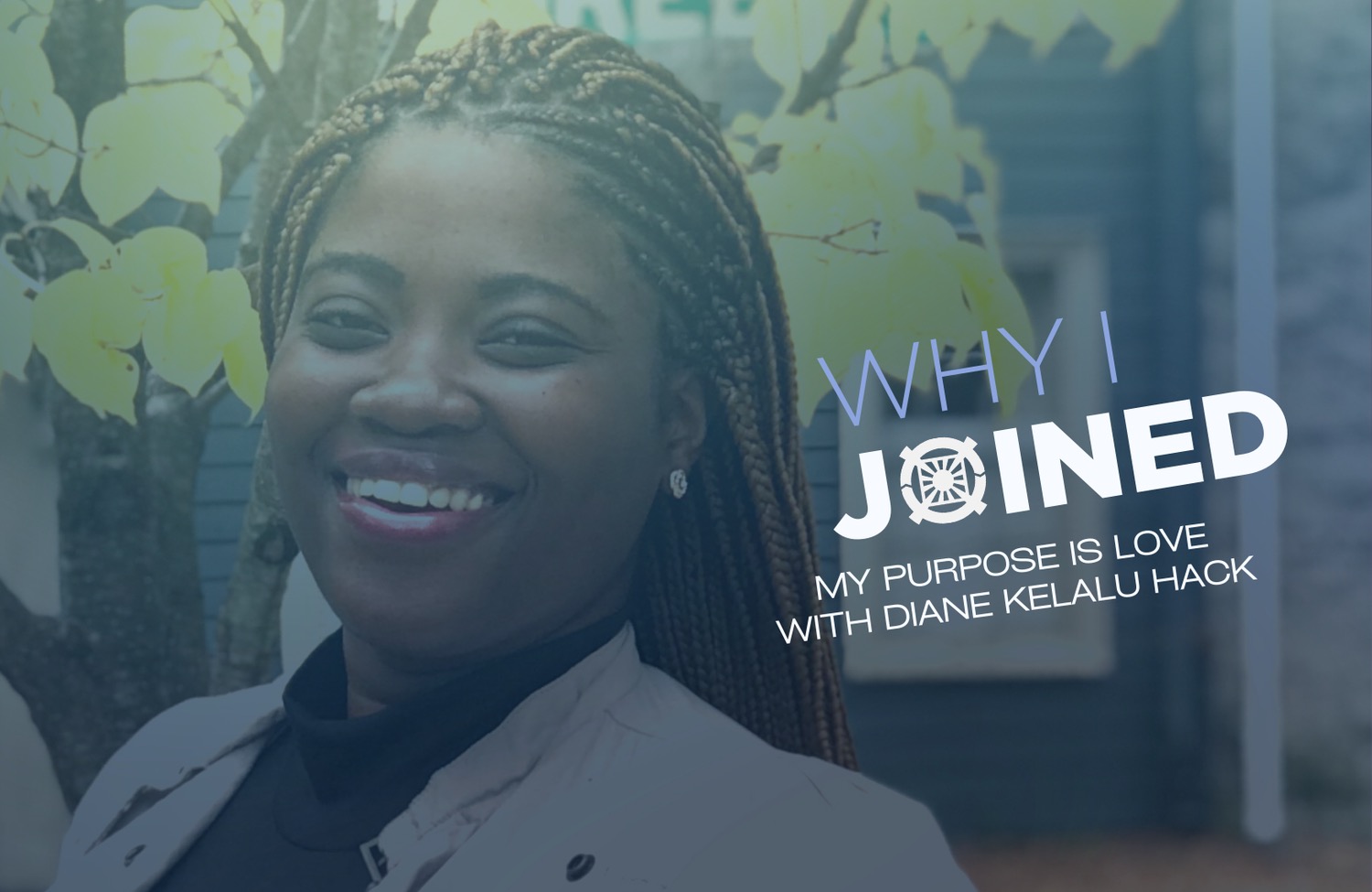
Diane Kelalu Hack
My Purpose is Love
Podcast · Why I Joined (FFWPU) · 47:53 · USA
She was the regional Youth and Young Adult Coordinator for her church for two years and worked as a Nursing Assistant. She recently took on a new role as National Administ
Hosts: Thank you so much, Diane, for coming on today. We know you're super busy being a nursing student and a wife and a YouTuber and all these other roles, but we're excited to have you. So let's get started. What's a particular memory that sums up your experience of growing up in the Unification Church?
Diane: One memory that sums up my experience growing up in the church is my parents being able to pray over me on every single birthday. They would have their hands over me, and it just felt like a beautiful moment. I felt like, wow, I'm really growing in this traditional and kind of religious environment where my birthday wasn't just for myself — it was really for the whole family, and even generations that have passed and generations to come.
Hosts: Can you describe that tradition for our listeners?
Diane: Basically, parents are supposed to be the representation of God here on Earth. So on every birthday, your parents put their hands on the top of your head, and you pray in front of God. You are basically thanking God for giving this child a beautiful life, giving her this opportunity to grow up in such a great environment, and protecting her throughout all these years. It's parents representing God and praying over their children as a thank you to God for protecting this child.
Hosts: What was the impact of hearing those words from your parents? What did you feel when they were praying over you?
Diane: I felt very special and precious. I felt that I was loved, and that I wasn't just here for myself but for a greater purpose. Like, I'm God's child and God really loves me. You feel precious when you hear those words. So I felt very precious and special during that time.
Hosts: It sounds like your family was really pivotal in your spiritual experience. It also sounds like you feel very close to your parents from the way you describe them as representatives of God. In your intro, there was mention of you having a very strict upbringing. What was that like — having a strict upbringing, and yet a very close relationship with your parents?
Diane: Although my parents were very strict, I think they were very understanding, and that's what helped a lot. They were strict on traditions — we would usually pray in the morning and pray at night, and you can't miss those prayers. But they were also understanding at times when I would say, I don't want to pray. They'd ask, oh, okay, why don't you want to do that? That's what brought me closer to them, because they understood that faith takes time. It's not just forcing this person. Of course you have to be strict in certain things, but you also have to be loving and understanding when it comes to certain situations in life.
Hosts: You grew up with parents from the Congo, so you spent your first 13 years in Africa and then moved to the US. Can you talk a little about that transition? Did your family traditions change or shift?
Diane: It was definitely a big change because obviously the culture is different. But although we moved here, the tradition in our family didn't really change. My parents wanted us to still have those African traditions and know where you come from. I remember my mom always saying, you have to know that although you're here and you're American, you're still an African and you still have to remember your country and your continent. So in terms of traditions, it never really changed. Maybe they became more understanding when they saw parents here — like, oh, you let your child do this, okay. On that part maybe it changed a little. But overall we're still holding on to that tradition, and we still do hold on to it today. I'm really grateful for that.
Hosts: What would you say was a pivotal moment or time in your life when you made a conscious decision to stay in this church, stay in the movement?
Diane: My first year of college — not the college I'm going to right now, but my previous one, two years ago — I was talking with my friends and we were discussing God's heart. Who is God? Where does he come from? Why are we suffering on this earth? I remember my friends saying, hey, God is always happy all the time. He's probably seeing all these things happening to the world, but he's not doing anything about it. I remember being very sad, because in the church the way we speak about God is different. We really feel God's heart — God is happy at times, but he's also sad at certain times. For me, the sorrowful part of God is something very special that I learned in my church. So when I went back home I felt like, wow, I'm in the right place, because I'm able to understand God on a deeper level. I felt that in my heart. Where else am I going to go? This is it. So I was like, I'm here and I'm not going anywhere.
Hosts: So that was after you were married?
Diane: Almost, yeah.
Hosts: Why was it important to you, that point about understanding God's sorrowful heart?
Diane: When I was having those conversations with my friends, I felt like the responsibility was just given to God — oh, God should do this, God should do that. But for me, I was looking at my parents, and I thought, would I want my parents to do everything and not help them out? It's important to know that we have this parent — however you want to call God, father, whatever — but he's also a parent who wants their children to help him out. I felt like God is not always happy, and if he's sad, then as his daughter I should help him out. I should be able to understand his heart, understand how sad he can be sometimes when he looks at war, racism, all these things that happen. He's not happy about it. I was hoping they could understand that side — as children, would you want your parents to do everything and not help them out if they were suffering?
Hosts: Did you say this to those friends you were having the conversation with?
Diane: No. I was too scared.
Hosts: That's powerful, though, what you shared. For me, too, that resonates really deeply — the idea that God is almighty and all-powerful and we depend on him, certainly, especially in our times of need. But why don't we think about taking care of God, too? Do you mind talking a little about growing up in the church? Did you go to public school and have friends outside of the movement? What was your relationship with the church, and with other — we refer to the second generation of Unificationists as BCs, or second generation.
Diane: Growing up, I didn't have so many friends outside of our church environment or movement. I was close to a lot of my friends from different retreats and youth activities. But over the years it changed a little. I went to public school at first, and then once I graduated from high school I went to a Catholic school. That's how I joined a Christian group on my campus, and I was able to make a lot more friends outside of our church community. That really helped me understand the other side of life. I had my own mindset, because I grew up with people who had the same kind of perspective as me. But when I had friends outside of my circle, I was like, whoa, this is what happens. It's really important not to just stay with people who have the same perspectives as you, but to get outside of your own circle, outside of your bubble. Over the years, even now, I'd say I have more friends outside of our church community than in it. One of my best friends is also a Christian. So it has changed over the years.
Hosts: What kind of conversations do you have with those friends, like with your best friend who's Christian?
Diane: It's funny because we used to live together upstate New York, and she recently moved to New Jersey. We moved literally 15 minutes away from each other. When we meet, usually we talk about life in general. Our first conversation that we really deeply talked about was Adam and Eve — what happened, and stuff like that. Mainly we talk about God. She recently got engaged, so she asks me questions about marriage. We discuss how you can bring God into your marriage, how you can bring God into your family so that your kids can be educated in that kind of environment. She has two kids, and she's thinking, how can I educate my kids in this kind of world that we live in? Those are a few of the conversations we have.
Hosts: I'm curious, is that the time in your life where your love for Christian music came from? Because I know that's a point you and I bond over. Diane just shared earlier today on her Instagram for KING & COUNTRY's new remix song by Timbaland. We were talking about Kirk Franklin and Lauren Daigle. Is that something you've always loved, or did you discover it more from fellowship with the Christian group in college?
Diane: It definitely came later. I had no idea — I was not listening to Christian music growing up. But because I interacted with so many Christians and would go to some of their youth meetings, I'd hear songs that were really upbeat, and I was like, I'm discovering something new. I was excited. I started listening to more Christian music, even Christian rap music. Growing up I always loved different kinds of music, but I wasn't really so interested in Christian music until I met my Christian friends and Christian groups.
Hosts: I think the closest I got was Switchfoot. I love Switchfoot. I just got my husband to listen to it for the first time. He's like, oh, this is deep. Switchfoot and Mumford & Sons. Lots of hidden messages. I like the more subtle Christian or religious messaging. I've been feeling Lauren Daigle lately. The struggles in my life — somehow her music just cuts really deep. Incredible musician.
Diane: That's a big part of African culture as well — music, that vibrancy of sound. I cannot drive without having music in my car. If there's no music, I feel empty.
Hosts: Do you feel God when you listen to music? Do you feel something deeper?
Diane: I do. That's the reason why I love Christian music so much. Somehow I can connect — like Nancy was sharing, you feel like, man, this is what I'm going through right now, and this person understands me. I don't know them, but somehow their music says, she gets me, I'm going through this right now. That's why I really fell in love with Christian music. I'm listening to it and I feel like I can connect to God at a deeper level.
Hosts: There's a gap in the market for Unificationist religious music mainstream. For all you musicians and songwriters out there — I'm looking. So tell us about this turning point at the spiritual retreat in Korea. Describe to our listeners what that is, what the experience was, and the impact it had on you.
Diane: It was either 2017 or 2018. I went to a spiritual retreat in Korea, and during the retreat we basically have no phone — you're trying your best to really connect to God, to be in that moment and feel something in your heart. During that time I was struggling with my identity. Who am I? Why am I even here? Why am I doing all these things? There was a moment when I was praying — it's beautiful scenery, mountains everywhere, and you have the chance to go up to the mountain and stay by yourself and pray. I remember being on top of the mountain, looking down, praying to God to show me, why am I here? Why was I even created? What do you want from me? At that moment, I can't explain it. It wasn't words, it was a feeling — just a wave of love, hope, something that cleared up my mind. I don't have any words to really explain it.
Hosts: It's okay. There are no words. We have those moments in our life when something comes to us — inspiration, a feeling completely outside of ourselves and the mood we're in. What led you to decide to go on a 40-day retreat? That's a significant amount of time to spend on a retreat. Was there something you were struggling with that led to that decision?
Diane: The first time I decided to go was because my friends and I talked about it and we said, we need to go to a different country and just experience. But the 40-day retreat didn't happen right away. It was something I decided once I got there — I wasn't planning to go to the 40-day retreat. I actually went there for a different youth program, if you're familiar with Top Gun. At that moment I was struggling with myself so much. I felt like if I went back home I wasn't going to find an answer. So I decided I was just going to do this 40-day workshop and see what God had in store for me. I made the right decision, because after that time I became so clear about who I am, why I'm here, and how God loves me so much. I'm glad I decided to stay.
Hosts: So, Diane, why are you here? What is it that God loves about you so much?
Diane: I'm here to love everyone. I'm here to really see everyone as God sees them and love them, because sometimes we expect so many things from people. But sometimes it's just good to love them as they are, not ask them to change something. I just love you for who you are, and you don't need to change anything, even if we have different perspectives.
Hosts: Is there a person in particular you had in mind that you had to work at — just loving them for who they are? You don't need to name names.
Diane: One of them is my mom. But it was a lot of people in my life. It wasn't like I hated them — you just struggle with people sometimes. Even our own parents, sometimes we struggle with them. Why are you like this?
Hosts: I think we can relate. I'm sure they feel the same about us.
Diane: They do. But I guess it's just part of life. You have people you struggle with outside of your family and inside your family. So to answer your question — I feel like God really wanted me to spread love to people.
Hosts: That's a powerful answer to your life's purpose. It sounds simple, but we struggle sometimes with even seeing ourselves from that perspective. To feel so strongly about that toward other people — I know this is a trendy catchphrase, but it's a very holistic, embracing practice, and it's hard. Even though it sounds simple, it feels so hard to do in practice when you are struggling with those other people. The Lord knows I'm going through that right now. Reading different perspectives that are coming up for Gen Z and this generation — you know, my kids one day will grow up, and they'll be influenced by that. I was reading something last night and my husband just said, Jesus Christ, so flabbergasted at the perspective, where they're coming from. But it's like, okay, how do I get from there to just loving them where they're at and trying to understand and see them as God's children who are figuring things out? I'm curious — has interacting more with Christian groups and understanding more Christian perspectives shifted your own understanding of Unificationism in any way? How has it impacted your own faith practice?
Diane: It's helped me understand God's heart, like the history of it. Growing up, I didn't really know about Christianity. My mom was Catholic, so they grew up in that kind of environment. Even though they knew about Christianity, I never really connected to it. I just felt like, oh, it's just there. Of course we believe in Jesus, but it was just, oh yeah, Jesus is a savior. I didn't really understand it or feel it. But when I interacted with a lot of my Christian friends and the Christian community, I understood more of Jesus's life course, what he was able to do. And it connected me to Reverend Moon's history. I felt like, oh, actually, without Jesus Christ we wouldn't have had Reverend Moon. So it was a history I was able to connect. Both Jesus and Reverend Moon are people I should be grateful for. It's not just Father Moon, but also Jesus Christ, who really led the way to have everything we have today. If I had never been open to that community, I wouldn't have been able to understand that, and I wouldn't really understand Jesus's heart and life course.
Hosts: I took a course at the Unification Theological Seminary about Jesus's course and the early Christian church. It's powerful to realize just how much of a revolutionary he was, and how he used his own humility, his own personality, to make change. That's a powerful message for a lot of young people who feel they don't have power — just being themselves and owning who they are and their position as God's child. That's what gave him power. And by the way, for all our listeners out there, I think you can infer from our conversation that Unificationism and the Divine Principle offer a very unique perspective of Jesus Christ, and a different perspective on the persecution he received in his time here on Earth. So if you're interested in checking that out, please visit our website. The Divine Principle, which is our core scripture, is available for free on our website. You can explore all of this at your leisure.
Hosts: Diane, one other question. I know you've talked about this on your channel and on other podcasts, so I don't want to take exactly the same angle. But you decided to receive the marriage Blessing, which is a holy sacrament in our community. Can you talk about that decision? What led you to want to be what we refer to as being matched? We have some arranged marriages, but suggestions from people, and you decide whether you want to get married. What was the point where you thought, okay, I want to get married in this tradition? What was the starting point?
Diane: It was when I saw the relationships around me — the elders, my parents, a few couples that I saw. I really felt their marriage was not just my husband and I and our kids and that's it. It was more like, this is for a greater purpose. It's centered on God, where I'm living for the sake of my partner and really wanting to make them happy. That doesn't mean you're not happy in a relationship — you can still be happy. But the mindset is more about the other person than yourself. For me that's ideal, because a lot of relationships do not work sometimes because people are so self-centered — oh, how can I be happy in this relationship? It's always about the I, never about the other person. Seeing those relationships, I felt, this is what I want. I don't want to go into a relationship where it's self-centered. I really want a relationship where both my partner and I are living for the sake of each other and loving each other, centered on God, so that it's not just ourselves, but really for the greater purpose to serve the world as a couple. That's what led me to my decision.
Hosts: What was the process like once you made that decision? Did you work with your family? Can you walk us through that?
Diane: Yeah, I worked with my family, mostly with my mom. It was great that I worked with my parents, because I was able to understand them even more. It really brought us together because we worked on our communication. It takes communication to talk about future marriage and all that. It brought us closer because we talked about real stuff — like, what kind of marriage would you want to have? I made the right decision to work with them. If I didn't, I feel I would have made a bad choice. They helped me a lot, so I'm glad I worked with them.
Hosts: It sounds like you had to develop more communication, to be more honest and open with each other. Were there any fears that came up? Because as a mom — my oldest is 12, she's not ready to get married yet — but a lot of times when I interact with her, especially when I'm coming down hard on her, it's something I'm afraid of, and that's why I become kind of aggressive towards her, because I'm scared. What things might you or your parents have been afraid of or nervous about? Did you end up having those kinds of conversations as part of figuring things out?
Diane: Definitely a few things came up. As a kid, I don't know — I feel like maybe it changes over time when you're growing up and you become closer to your parents or understand them more. But during that time it was hard, at least on my side, to be really honest about what I wanted and what I didn't want. I would say they also had a fear, like, oh, she's expecting too much, maybe. That was what I was assuming back then — oh, maybe they're going to think I'm expecting too much. But we were able to work through that by being honest, by opening up. It came mostly from my side, really being able to open up. Once I did, then they also opened up to me — oh okay, this is what we're thinking, what are you thinking? Then we were able to have a give-and-take communication, because we were honest with each other. It was definitely a struggle. It wasn't perfect. But I decided I had to let go of my preconceptions and really be honest and understand that they also have their struggles that they're working on as parents.
Hosts: What was one of the concepts that you struggled with?
Diane: Oh, I can't remember.
Hosts: You're too happy now. You've overcome all of it. Well, knowing a little about your story with your husband — you and your husband come from different cultural backgrounds. You grew up in the movement, but we're all influenced by our cultural backgrounds. And there was a moment of pause for you, I believe, where you were considering how those two cultures could come together.
Diane: That's right. Wow, you know more about me than I know myself. It reminded me of my dad especially. One thing we thought about was, oh yeah, we're Africans. Because I wanted an interracial, intercultural marriage, one thing that came up was, are we going to be able to make it work? Is this person going to be able to accept our African culture, accept our family? Because with African families, if you marry one person, you marry like 50 other people that you don't know. So, is this person going to be able to tolerate this?
Hosts: You put that on your application. You have these profiles. So just FYI, you're marrying 50 other people as well. I think in every family that's the case, whether you realize it or not.
Diane: Yeah, definitely. So maybe that was a concern. Once we were having conversations, with my husband, I felt, oh yeah, maybe my parents are right — are we going to be able to overcome this intercultural background, with the race and everything? But then when I had a conversation with my parents, after they met my husband for the first time, they really felt, oh wow, this is really something that's going to work out, because they saw how we interacted and how his family interacted with my family. It was, oh wow, maybe we were wrong — this is something beautiful that could work. So it was just a pause, which is natural — to worry and think about the future and what could happen.
Hosts: What cultural background is your husband from?
Diane: His mom is Japanese and his dad is American — he's white. He probably has some European background — he always talks about that, on his dad's side. But yeah, he's half Japanese, half white.
Hosts: What was it about your husband that gave you confidence it could work?
Diane: There are many things, of course, but the biggest thing was him being able to work things out. That's the best quality, because in marriage I wanted somebody who's going to work things out no matter what. It's not always going to be lovey-dovey, perfect. Having somebody willing to go past the difficulties, the struggles — that was the best quality. That was the best gift God could have given me, somebody willing to work things out. The second biggest thing was how caring he was. When we met for the first time, he would give food to homeless people. I was like, oh my God, this is great. Check — he's caring. So that was the second thing. I felt, wow, this person can really care for my family. I see it now, even with my grandmother, the way he treats her. I feel like, yeah, this was the right decision.
Hosts: That's really powerful. You realized you were looking for those deeper qualities in a relationship up front — this is before you were married, in your courtship. We get a lot of questions of, how did you know they were the one? I like to say that's never the right question. It's always, what are the qualities that are important to you that you want to see reflected back in your relationship? It sounds like you found that in each other. I love that it's this discovery of each other, and the melding of the cultures and family backgrounds. It's all part of each person's spiritual journey, too. The way our relationships play out affects how we feel God and how we experience him. So what do you feel God's telling you lately? What are you discovering on your spiritual journey right now?
Diane: I'm discovering that it's not easy. Like we talked about — loving people and really understanding them and their perspective. Although our church community has the same kind of mindset, sometimes we don't. Lately on my journey I've been able to really understand how to be patient — patient with people, patient with your own journey. You have your own journey. Don't look at somebody else and say, oh, they're doing this, doing that, their life of faith is better than mine. It's really like I have my own journey, and it's okay if I'm not there yet. I'm going to be patient about it, because I know at the end of the journey God has something for me. That's something I've been really learning recently — just be patient with yourself.
Hosts: I feel that. Maybe you're telling me to.
Diane: God speaks through all of us.
Hosts: Exactly. So tying into that a little — what are you reading? What are you listening to? What are you engaging with that keeps you inspired? What does faith and spirituality look like for you now, after being married for a few years and moving forward in life and new dynamic relationships?
Diane: Definitely Christian music. Every time I feel down or I don't understand my journey, I don't understand God, I just listen to certain Christian music. Another thing I discovered — or not discovered, but it's been part of my life — is talking to my husband about godly topics. We recently started doing it, and it's been helping, because he can say something, and I'm like, oh wait, maybe that's something God is trying to tell me. Just having those conversations has been really helping me. Another thing is going out to nature, or doing something that has to do with my physical body — healing, exercising, something natural like flowers. I've been into flowers lately. I don't know why, but when I see a flower I'm just like, oh my God. I've been trying to embrace my surroundings — nature, my husband, and Christian music. Literally just before this, I was listening to God Only Knows, the remix. It came at a moment when I needed it, because I was struggling.
Hosts: Music especially — I literally have entire albums that I connect to a time in my life that spoke to me that don't speak to me now. I'll listen and be like, oh yeah, I don't feel that way anymore. But it got me through a hard time, or lifted me up, or echoed the joy I was feeling. Those are powerful spiritual moments, where you're feeling really connected with who you are, or with something bigger than yourself.
Diane: Another thing is getting to know other people's journeys. It helps me understand where they're coming from, and learning from their past journey — oh, this is what they did, what can I learn from it?
Hosts: What would you say keeps you engaged in this movement and with this faith tradition? We are a new religious movement. There's a lot of persecution, maybe misunderstanding, and even growing pains — lots of growing pains. So why still engage?
Diane: Because I have nowhere else to go. I'm kidding.
Hosts: Well, you've got all those Christian friends — lots of churches to choose from.
Diane: What keeps me here is that I've been able to feel God in a way I cannot explain. When I talk to even my Christian friends — I'm not saying they don't feel God, of course they do, in a different way — but I'm here because my connection with God has been so incredible that I don't want to let it go. It's not just because of the traditions we have. Of course those are important to me. But the biggest thing for me is, I am understanding and feeling God at such a deeper level that if I left I would lose that connection. I just feel that. And I feel that Reverend Moon and Mrs. Moon have been able to do such incredible things in this world, and I want to be part of that, like their support. I want to build that kind of dream, because I know it's beautiful — I've seen it in our communities, I've seen it in couples, I see it in my own marriage. I want to continue that work for the next generation to come, even my own future children, building that kind of community where they feel safe and loved and can also hopefully feel God at a deeper level.
Hosts: Well, on that note, I think we'll sign off. Thank you so much, Diane. This has been incredible for us. As you said, learning from other people's journeys is what gives us life. Thank you so much for sharing. I feel God through you, Diane.
Diane: I feel God through you. You fulfilled your purpose today. We feel loved. Well, thank you guys for having me. I'm really grateful I was able to share this. I don't think I've ever shared it before, so I'm really grateful I was able to come. I learned a lot about myself just being here. It's amazing when people ask you questions.
Reflections about this person
Reflections are anonymous unless you put your name in. Every submission is reviewed before it appears.
Loading reflections…