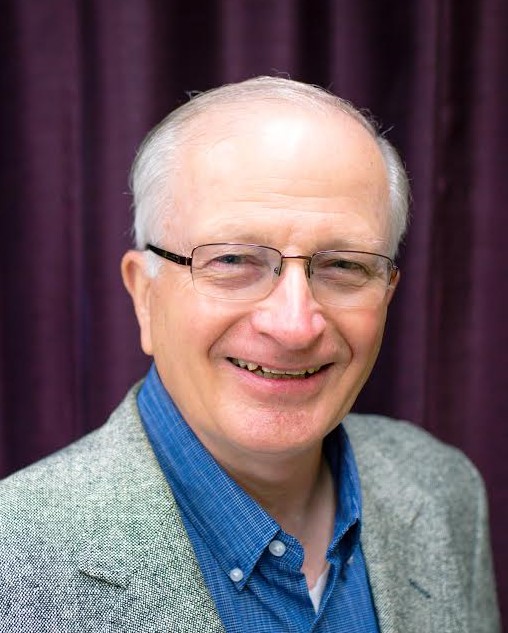
Bento Leal
Getting Kidnapped Strengthened My Faith
Podcast · Why I Joined (FFWPU) · 1:04:59 · USA
Projects by Bento Leal
- 4 Essential Keys to Effective Communication in Love, Life, Work — Anywhere!
Amazon bestseller in several categories; 140,000+ copies sold
Bento’s book, 4 Essential Keys to Effective Communication in Love, Life, Work—Anywhere! is an Amazon bestseller in several categories and has sold more than 140,000 copies.
Hosts: I actually read your book. I think we received a box at the headquarters office for Family Federation, and everyone got a free copy. I was like, oh, this looks good. It's not too long, very digestible. And I read the whole thing.
Bento: Wonderful. So glad you got it.
Hosts: My dad still has a reminder every day to do one of your action steps. It's in his calendar every night. You're one of his gurus.
Bento: Whoa. Okay.
Hosts: Reading that book, it really struck me that the Divine Principle teachings speak so loudly. You're not directly quoting it, but they speak so loudly in that book. I'm curious how life started out for you leading up to that. What was your childhood like? Were you raised religious? Or was this some big revelation that obviously had a huge impact on your life and your career?
Bento: The book came out in 2017, and I'd already been in the church for many years. I'm 74 years old now, so when it came out I was probably 67 or 68. There was a lot that led up to getting me to a point where I thought, well, let me do a book. But if we want to go back to my Genesis here a little bit — is that what you want?
Hosts: Yes, please.
Bento: Okay. I'm the oldest of seven kids in a Catholic family raised here in the Bay Area in Northern California. I went to Catholic schools, Catholic high schools. In fact, at that time I even went to Catholic seminary right out of grammar school. That wasn't unusual — in a Catholic family the oldest son might go to become a diocesan priest at some point. So I went to a seminary across the bay on the peninsula of San Francisco. After two and a half years, I thought, I'm too young to make that kind of decision. So I went back to Catholic high school in Oakland, California, and graduated from there. I went to a local community college for a couple of years, and then I graduated with a B.A. in sociology from Cal State University in Hayward.
Bento: In my journey, I had been a Catholic — you're born a Catholic, okay — but then I was deliberately Catholic, and then I was not. And then I got more confused. It was the 70s. The 60s out here in the Bay Area was off with all kinds of things — the war, the hippies, this and that. I became more non-denominationally Christian, and then finally I just became agnostic. There was just too much chaos going on. And college didn't help, by the way, when all my sociology professors were angry at the U.S. for being in Vietnam and everything else. The Black Panthers were on campus and all kinds of stuff. I was a very searching person, very hungry for meaning. And it was a very lonely period because you couldn't share too much of your journey with too many people. It was a very isolating period.
Bento: This would be early 1970s. I'd already felt like an old man. I had my college degree. But what do you do with a sociology B.A.? You don't do anything. The only thing you can hope for is to get a master's and maybe get into counseling or some social administration kind of thing. That wasn't me. So what did I do? I got my degree and I'm still loading trucks in the middle of the night for a trucking company, from midnight to 4:30 in the morning in Emeryville, California, where a lot of trucking companies were. My dad was a Teamster official. I got in the Teamsters — that's how I made money on the side. And there I am in the middle of the night, thinking I've got a college degree, I'm living by myself, life makes no sense, and I'm pushing freight in the middle of the night. Everybody's sleeping, and here I am having lunch at four o'clock in the morning. It's just backward living.
Bento: I remember going home one day. Normally my drill was to go home — I'm all sweaty, I've got a Ben Davis shirt on, I'm just soot from top to bottom. I'd take all that stuff off, take a shower, pull the blinds down the best I could, and go to bed. Everybody else is alive; I'm sleeping, trying to get some sleep because I've got to do it all over again in the evening. But that morning I got home and I had had it. I'd had it. I got on my knees and I began cursing God. I said, this doesn't make sense. I've been a decent guy. I tried to do the right thing. I prayed. Where are you? How come you're not in my life? Somebody's on death row at San Quentin, somebody throws in a Bible and says, read this, it'll change your heart. The guy reads it and he's reborn. And I said, well, wait a minute. That guy killed ten people, and now you're in his life. What about me? I thought, that's so unfair.
Bento: So I had this showdown prayer with God. I let him have it. I said, this doesn't make sense. You don't exist. And if you do, you're just rotten. You're no good. You're treating me bad. I let him have it. I said, I'm not even sure you're there, but if you are, this doesn't make any sense. Man, I was crying. I was beating the floor — second-floor apartment. I don't know if anybody was downstairs, but I was by myself. And then I finally ran out of gas. I finally ran out of tears. You cry so much that your eyes get sandy from all the salt that's in there.
Hosts: Oh, yes. Definitely been there before.
Bento: You're trying to wipe it away. And then I felt, I don't even know if you're there, but if you are, you're not going to get better than that. That's it. That's who I am and that's where I'm at. I hit bottom. And so I went to sleep. My life went back to normal. There was no change. And then out of the blue, a guy I hadn't seen for three years called me up. We had known each other since we were twelve years old. Our families went to the same Catholic church. He's the oldest of four boys; I'm the oldest of seven kids. Nick calls me up out of the blue. He's also raised in San Leandro, just like me, where our church happens to be right now. He says, hey, Ben — I went by Ben, my abbreviated name at the time — how are you doing? He tells me he's living with this community he found over here in Oakland, and it seems pretty good. They've got some principles that they study.
Bento: I remember Nick was this long-haired guy that wanted to go to Yosemite and eat pine cones. I'm thinking, this is a hippie pad, a typical hippie pad, and he's all sucked in there, and the principles are: this is your part of the refrigerator, that's mine, it's cool. So I go over there and I see all these shoes outside. I thought, what's all that about? It's a house. I go in, a girl answers the door. She looks really nice, very lovely. It doesn't smell like pot in this place. And then I see Nick, and he's totally defoliated. No more massive hair. He's got his beard all off. He looks really good. I told him just the other day, I said, you know, Nick, I was sold when I saw you. Period. I hadn't heard anything yet. I hadn't heard any Divine Principle. I didn't know anything about anything except I knew you before, who you were — just as messed up as me. Nice guy, but clueless. When I saw the light in your eyes, my spirit told me, I don't know what you've got, but I want it.
Bento: In a sense I was already in, and the showdown prayer was good for me because it really cleaned out whatever I had — nothing. So I was available. I think that's the big thing. Some people pray but they're not really available. I think God says, I don't know if I come in, you're probably going to wash me out. I need to see a little more emptiness. I need to see a little more desperation. And man, was I desperate. Then I heard Dr. Mose Durst give a beautiful introductory talk — what's famously called the elephant lecture. The theme is: your experience of life is your experience, but there's a lot more to life than you know or have experienced. Not that your experience is wrong; it's just your experience. There's a whole other world out there. Are you open to learn more? Everybody's got their personal experience of the side of the elephant — the elephant's a fan, or a hose, or this or that. But there's a whole big elephant. Do you want to know more?
Bento: I thought that was a great question. I don't know everything. I'm open. I've been to college, but sometimes you know less after college than when you start, because your life didn't keep up with what you learned. You've grown four or five more years, but your questions are ten times longer. So I heard that and I decided, this is for me. I went to a workshop and got excited. Then I joined. I rented my apartment for another month just in case it didn't work. I left all my stuff there. I said, I'll give myself a month; if I can't figure this out, then I shouldn't even have a brain in my head. Within a week or two I said, I'm totally in. So I moved all my stuff out and became a full-time member. That was August 1973. Fifty years ago.
Hosts: Wow. That is quite a journey. So when you say a full-time member, what does that mean?
Bento: Good question. When I jumped in, I moved into the centre. I became what we termed a centre member — it's like I joined as a missionary. We were very, very good about — the women, we called them the sisters, had their own floor, their own rooms, their own bathrooms, their own world. And the men, we called brothers, had our own area. Very separate. Not like the hippie world and all that jazz. Purity was a very important thing.
Hosts: It wasn't quite like a commune, right?
Bento: It was not a commune. Not what's yours is mine and mine is yours. It was really sacred. We wanted to have that kind of holy atmosphere — you're a temple and you want to prepare yourself for a heavenly marriage and family, and respect the other person, respect the other sex. It was very brotherly and sisterly that way. I lived there and I still worked my job loading trucks in the middle of the night for about three months. Then I finally asked, can we stop? Can I get out of doing that? Because I'd come home after working all night, try to get two or three hours of sleep, and somebody would nudge me — hey, let's go witnessing, you want to come with me? I'm exhausted. And when everybody else is trying to shut down in the evening at the family meeting, I'd get in my car and have to drive to work all night. I was getting tired. But I was totally in. Finally I was able to stop doing that. So I was in a heavenly communal environment led by principles. We'd invite people over and have evening programs pretty much every night. We had workshops — Divine Principle study workshops — either there in Oakland or at a place called Boonville, which is out in the country a few hours away. It's very scenic. You're away from the hustle and bustle of the city. You can actually have a prayer and just look at the sky. Every weekend was another thing. It was very beautiful. That's how it started for me.
Hosts: I like the way you described the centres. There have been some fantastical accounts or imaginings of what went on at these so-called communes — we call them centres. I'm sure it wasn't as simple for every single person, maybe trying that new lifestyle of brother-sister relationships and living in a centre with a lot of other young people. But I'm curious — you said you were convinced when you saw your friend clean-cut and you felt this bright spirit. When you actually heard the Divine Principle teachings, what was it particularly that struck you personally?
Bento: Great question. When I finally heard the Divine Principle itself after the introductory workshop, I moved in Friday and then heard the Divine Principle the following day. Already the introductory workshop was enough to get me through the door. Then what captured me about the Divine Principle right from the get-go was the explanation of Genesis chapter 1, verse 28: Be fruitful, multiply, and have dominion — God's first words to Adam and Eve, the first human beings. It seems like a simple phrase. Everybody's been reading it — Jews read it, Christians read it, Muslims read it, because it's the first book of the Bible or the Torah, and it's in the Abrahamic tradition I'm mentioning. It's right there. And it's God's first word.
Bento: When it was put out on a blackboard — we didn't have PowerPoint or laptops at that time — and explained: here's what be fruitful is. Your mind and body centred upon God. You grow up like that. That's what it means to be fruitful. Then you bear enough fruit of good character to be blessed in marriage to your spouse, who's also gone a similar path. At the right point — not that you're perfect, but you reach a certain level of perfection of growth — you come together as a couple and co-perfect yourselves, helping each other continue to grow to make a godly couple. Then you have godly kids who want to grow up to be like mom and dad, who are really full of love. You make this family, and the family is a school of love, and it impacts other families, creating a society, nation, world. And then guess what? You have dominion over creation. Dominion means lord over. That's where the word dominate comes from. It means lord over; it doesn't mean beat up and pollute. It means take care of this home. When you take care of the home, the home takes care of you. Then it's the kingdom of heaven on earth and in the spirit world.
Bento: When I saw that on the board all done up, I said, that fifteen-minute explanation was more than anything I ever heard in four years of college sociology. I thought, that's the life blueprint — not just for Adam and Eve, but that's Bento Leal's blueprint. That's the blueprint the Creator gives to the human being, all human beings. That blueprint is in here. We just have to discover it and unpack it. It's not like, well, let me get that thing into me. It's innate, just like the original mind is innate. That seed is already there. Now we've got to fertilise it, uncover it, take out the garbage around it. It's incorruptible. It's designed for eternity. You can't smash it. You can't get rid of it. You can abuse it, encase it, minimise it. But it's like David wanting to defeat Goliath. If you can grow that David in there, then the Goliath disappears. So I really got excited about that.
Bento: Having been raised a Catholic boy, there were some very interesting things that came out in talking about the mission of Jesus. Without going into too heavy a deep dive — one of the questions was, if the chosen people were prepared to receive the Messiah, and if God then gave birth to Jesus as the Messiah, then how come they didn't receive him? Who failed to make the connections? Why did Jesus have to go and try to grab the guys who were just catching fish? Couldn't anybody else have been his first disciples? What about John the Baptist? He baptised him. How come John wasn't one of the first apostles? He would have been a bright one. He could have said, hey, Jesus, these guys are yelling at you — I know these guys, I'll take care of it. He could have answered their questions. Jesus, I know he looks like a humble carpenter's son, but trust me, fellas, you know me. I'm no fool. Listen to my cousin here. And if John sat down at Jesus' feet, John's buddies would have sat down too. Things would have changed a lot.
Bento: I never realised all that stuff when I was being raised Catholic. But it started to add up. Unanswered questions in the Bible that I had from my Catholic upbringing suddenly were getting answered. When I was a Catholic, if you asked these kinds of questions, the nun or the priest would say, well, it's a mystery. You'll know when you die.
Hosts: My dad told me that too.
Bento: Wait a minute. I'm alive right now. Then I realised, no, the answer that it's a mystery is kind of like, look, I really don't know, but I don't want you to know I don't know. So I'm going to call it a mystery, which puts a halo around your question. And you'll find out when you die. Well, that's not going to help me.
Hosts: A good non-answer.
Bento: A good non-answer. Then I got really thrilled about the relationship between our spiritual self and our physical self, and the role that doing good deeds on earth plays in fleshing out our spirit self. Otherwise, if it's only an eternal spiritual life, why does God bother to make a physical world if it can go haywire like it did? Why don't you just make a spirit world? But when you realise that God made an earthly world so we can grow up our spirit while we're alive, to receive God's love and truth and then do something with it — we use our body to grow our spirit. At some point, when you get to a certain point, you just park the body. Thank you, body. It's all borrowed stuff anyway. You don't own these molecules. We got them from the earth. Thank you very much. I needed it. I'll give it back. Give it to somebody else. That all made sense to me. This really rocked my world. Then I thought, more and more people need to know this. And I became more familiar with who came up with it.
Hosts: You mentioned that being in college and seeing all the issues in the world, you really kind of became agnostic and questioned the reality. Was God there? Was it that you encountered this teaching and then suddenly, poof — oh, makes sense, God must definitely exist? Or was there a process, a kind of reckoning for you?
Bento: There's definitely a process. God knows each one of us very well. First of all, I believe God is very big. I read that somewhere and I believe it. He's bigger than my thought of what big is. But God is hugely knowledgeable about me, as he's knowledgeable about each person. And God knows the path Bento needs to go. It's Bento's path to discover him in the way he wants to relate to me. Everybody has their — it's not cookie-cutter. There may be similar beads on the necklace, but the way those beads happen and the way the faith fleshes out and develops is custom-made. If I've got three kids — I do have three kids, a boy and two girls, three adult children — they're very unique. You talk to this one differently than you talk to that one. You love them all 1,000 percent. And that's just three.
Bento: So to answer your question, Nancy — it was enough to get me knowledgeable, and then you join. But then you're going to have your challenges. You're going to have ups, you're going to have downs. Is your faith enough to keep you going in your down while you're down? You want to have enough to say, it's still right. I'm having a challenge right now with either my self-centred behaviour, or I don't want to do this or that, or this is too challenging, or people don't understand us and they're telling us we're idiots — why don't we go get a real job? But the downs drive you to ask the deeper question: why am I here? It's not that you're okay and you ask that question. It's the down that asks you why I'm here, because you really need that reason to be able to calibrate and get back to a better spot than you were even before.
Bento: You go up and then you go down. You go up and then you go down. But the down here is higher than the up that was here. It's like a staircase. Reverend Moon, Father Moon, would talk about this. You graduate from one level and then you hit bottom again at the next level. You think, wow, where did that go? I thought it was going to keep soaring. No, it's a different world now. You've gone from an individual level — now it's a couple level. Now it's a family level. Now it's this level and that level. I've been through a lot. I went through deprogramming at one time. I don't know if you want to get into that. That was an exciting event.
Hosts: Oh, really? Wow. Can you describe what deprogramming is for our listeners? I think some people have never heard of that before.
Bento: In the 70s it was really hot and heavy, generally, with a lot of young religious movements — ours and others — particularly here in America. The deprogramming world comes with the idea that you're programmed to be a Unificationist. You've been brainwashed, and you're going to follow whatever the leader says. You make no personal decisions. Even though you're technically an adult, you really gave over your thinking to somebody else. That's why they call it mind control or brainwashing. So they say you're programmed, and we're going to deprogram you and get you back to being normally confused in society — or whatever they think is better. But I call it attempted faith-breaking rather than deprogramming.
Bento: I went through that in 1976 and was locked up in a hotel room for several days. I was able to escape. It was actually a very good — God knows me pretty well, I think — a good showdown place for me. Bento, are you in or are you out? These people are holding you until you really answer that question. No more fence-riding. You're not going to ride the fence in this movement with me or with whatever you're doing. Are you in enough or are you out? Now's the time. I need to know right now. That was really, really good. Really healthy. It was very scary, but it had me grabbed to God and grabbed to my faith. Former members that I knew who had quote-unquote been deprogrammed were there, and I knew them, and they tried. Their whole thing was: it's all false. Whatever you're believing is false. It was sugar-coated. You bought it, but it's not true. You should get out of there. But I had to dig into my faith. Why do I believe what I believe? These people are telling me to get out of it. Do they know something I don't know? God talked to me, and I felt God was with me, and he was all over me, man. It was beyond me. The way I escaped and the whole thing was like James Bond. It was amazing.
Hosts: Okay, now you have to tell us part of that story. How can you leave us hanging?
Bento: Well, my dad had set it up. I was stronger when I was younger, and I was fairly fast as a runner — not as good as my son, who was really good, but anyway, another story. My dad told the guys, you've got to be careful because he's strong and he's fast. So my dad kind of set it up, I found out. When they got me — this was at the end of my brother's wedding, I got abducted — they flew me down to Arizona and put me in a hotel room in Phoenix, a Holiday Inn. I was on one floor. Another person from Divine Light Mission was over there in another room. A Hare Krishna guy was over there in another room. They had a whole thing going on at this Holiday Inn in Phoenix — different faith organisations.
Bento: I was scared, but I played it tough. I didn't know I was scared. I was sitting there and they were talking to me. I was lifting up ashtrays and looking at foreheads. I'd pick up a lamp and look at a guy's head. They're watching my hand movements, thinking, man, this guy looks dangerous. And I'm thinking to myself, you got me? Well, guess what, fellas — I've got you. I don't know where I was getting this attitude. I finally told them, I've had enough talking here. I'm going to go to sleep. I owned the situation. One guy, his name was Howie, was sitting on a credenza in the hotel room. I'm tapping on the window, like I'm trying to figure out how thick it is. He says, well, I wouldn't do that if I were you. I saw a guy do that and get all cut up. I don't know where I got this line — I'm Mr. Tough Guy. I said, well, see, I think he did it all wrong. See, my plan is to throw you through the window and walk through the hole. The whole place went like this. And I would have done it. I was prepared to do it.
Bento: But you've got to be careful. You can't get caught up in your own macho-ness that you lose your moorings. You know what rope-a-dope is? Muhammad Ali played like he was getting hit, getting hit. Finally the other guy — George Foreman — got overconfident, started wailing away for several rounds. Once George Foreman got tired, Ali turned the tables and beat him and knocked him out. So, Bento, don't get so cocky. I had this feeling of, okay, I'm not going to physically fight — I'm talking about not getting so cocky with what you think you can do with these people. This is what I told myself. I just about cried internally. I didn't want to cry externally at these people; that would show a level of weakness. I thought, okay, I'm going to grab my faith, I'm going to listen to whatever you're talking about, but I'm going to hold onto God with the other hand. I'm not leaving the root where I'm at.
Bento: Every time they'd ask me a question, I'd grab hold of God, of my faith, and then I would answer it. I mentally would grab hold. I felt a heart on the wall. I saw almost a picture of a heart, and I saw a screw of my heart going into the wall. The heart is my heart, and the wall is God's nature. Every time they'd ask a question, I saw a hand grab a screwdriver and tighten the screw of me into that wall. Then I would answer, and then I'd feel confident. You have to be strong, but you have to be very humble, because otherwise you can lose your moorings and think it's your battle. It's God's battle, and you're not going to win on your own. This was a very telling lesson for me, and it served me well the rest of my spiritual life, and still serves me. Don't get cocky, kid. That's the deal. I've written a book on this. I teach Divine Principle. Sometimes Reverend Thompson's out of town and I'll give the sermon. Cool your engine, Bento. It ain't all about you. That brings me down to zero point — we like the term zero point — and keeps me humble.
Bento: Then I miraculously figured out how to get out of there. I won their trust, got on a bike ride. I kept coming back — okay, he seems to be getting out of it. I made a phone call while I was gone. Bottom line is, they flew me back home. I already had a point lined up where I was going to jog and run to. I said, I need a break, I need to go for a jog. I had the pickup point, and I was out.
Hosts: Wow.
Bento: I'm sure it broke my parents' hearts, but they wouldn't hear me otherwise. They didn't want to hear what my faith was. I had no choice.
Hosts: I find it so fascinating that they were trying to break you of your faith and yet somehow ended up reinforcing it.
Bento: Right. Well, they did break a lot of people's faith, I've got to say. A lot of people's faith. But mine was not. It went the opposite direction. I was fortunate. I'd already had enough. This was in the middle of my — I was in the first class at UTS, the Unification Theological Seminary. It was 1975. I had gone back to New York in early '75 from Oakland to be part of the missionary workshop. I was invited to participate and be a team leader in the 40-day workshop, as well as Nick, my friend, and others. Then I joined the seminary. Father Moon would come up often, especially to talk to the foreign missionaries who were going to be sent out. So I got a chance to reinforce a lot of who I was. In 1976, during the summer break of my two-year seminary experience, we had a big event at Yankee Stadium on June 1st, 1976. And then the Washington Monument, a big thing on September 18th, 1976. It was during the Washington Monument campaign that I got abducted. I went home to my brother's wedding and got abducted. I was leaving a section of D.C.
Hosts: It strikes me how much self-awareness you were able to maintain during that period, and just generally from hearing you describe your experiences and your spiritual journey. There aren't a lot of people who would look at having been kidnapped — you didn't go into a lot of the descriptions, but I know from some of the elders I've spoken to, just the horrific thing. It really was people's human rights being violated. Some people were tied up to a chair and not allowed to get up and move around. But just to be kidnapped at all and held against your will — that's not something many people bounce back from or even look positively on.
Bento: I was 27 years old. You'd think that's an adult, but in their eyes, no, you're not an adult — you don't have your correct thinking. It was violent. It wasn't physically violent. I wasn't tied up. I was definitely locked in a room, and once I threatened everybody, I woke up the next morning and all the lamps were gone, all the ashtrays were gone. They had me, but I wanted them to feel that I had them. I wanted to keep it a little bit like that. I didn't finally exhale until I was picked up at the pickup point and I knew I was going to be in a safe place. Only then did I finally relax. It was eight days from the time I got abducted until I got out. Some people are longer than that. But quite often, frankly, people's faith is broken within the first day. I knew some people that, when they got abducted, you'd think, oh, that person's going to be back like a lion — next time you see them, they're saying bad things about the movement. You see somebody else get deprogrammed and you'd say, well, that's the last time we're going to see that person, and that person comes back like a lion. So you just don't know.
Bento: I believe in the power of good ancestors and angelic help. But for the grace of God, I didn't even join this movement. Out of all the really good people out there, how come I get a chance to join this thing? I must have some ancestors that really — and I do know I have some really powerful Portuguese ancestors that were considered saints in their villages, in some cases in the Azores Islands. I don't know them, but I heard about them from my father and grandpa. I think some of those people really said, hey, Bento, we've got to help you. We're going to help you. You don't even know we're here, but we're going to help you because you're why we lived our life. Now you're on earth to be a faithful attendant of how God's providence is going to be seriously impacting this world right now, through Father and Mother Moon, everybody that's working with them, and all the other religious people that can work with them to make the kingdom of heaven. We need you, Bento. We're going to help you whether you understand it or not. In retrospect I didn't realise that at the time, but when I look back, I realise it.
Bento: It was a great experience for me. I'm not equating here, but Father Moon said his experience in Hungnam prison, when he was young — when you hear his stories and testimonies about being in a death camp in North Korea during the Korean War, his stories about his experience with God — it's all in Hungnam. It was like his workshop to really dig down. There must have been times where he said, I thought God was with me. He gave me the Divine Principle. What am I doing in this death hole, where everybody's dying around me — where'd you go? He had to dig. And then later he would say, I think he did say, it was a great experience for me. Even if he didn't say it, you could tell — if he found God before Hungnam, he really found God in Hungnam, and then everything else after that. In a miniature way, I went through a journey that was like that kind of level of violence, but it was very good for me, because I had to join all over again and rejoin. You kind of rejoin all the time. You recommit. Where am I now? Where am I now? It's exciting. I love the faith journey. You never know what's going to happen — just the way you young ladies called me and said, hey, you want to do this? Oh, thank you, that's a great idea. You just don't know.
Hosts: Father Richard Rohr — we bring him up a lot because in his book Falling Upward, and other works, he talks about necessary suffering. That word suffering can be triggering for some people, but what he means is: life is precious, but it's also difficult. There are obstacles in life that everybody experiences. You're not alone in that. God built that in. You were talking earlier about having this physical body with limitations that we have to overcome. Why create more suffering for your life than what is already necessary for you to grow? There's this Christian concept, and maybe in other faith perspectives as well, that God makes you suffer, puts obstacles in your way to make you grow. But that's already built into life. It's built into the physical experience. So when I hear you talking about your kidnapping experience and how you interpreted it — that's also a faith perspective that the Divine Principle had already taught you. We call it our original mind, our original nature, and our original nature is good. It wants to overcome challenge. It doesn't want to be defeated by it.
Bento: Thank you for that. Our challenge is to deal with the challenge and turn that barrier into a stepping stone to higher things. As an aside, one of the things I love to read or watch is Steve Jobs' commencement address at Stanford University.
Hosts: It's one of my favourites.
Bento: I've watched it probably ten times. I watch it almost every month. He says you can't connect the dots going forward, you can only connect the dots looking back. Right in the middle of his speech he says, one of the best things that ever happened to me was getting fired from Apple. It took me down again. What am I hungry for? And he found out he still loved to do this. He said it reminded him that at Apple he was becoming in charge of a big organisation, and he was more managing stuff than being that young, fresh guy that was doing this and that. He said if he had never got fired from Apple, it wouldn't have been what it is. He wouldn't have done what he did — no Pixar, no Toy Story. He says you can't connect the dots looking forward, but you have to trust that the choices you make, if you do it well and try to go with the right heart, it will all work out. That's kind of like a mantra for me. He didn't take it from a deliberately faith-based point of view, but that's a faith-type principle.
Hosts: It is faith. He just had trust.
Bento: He would have to say, my journey has done well — and even the difficult parts, the suffering parts, were maybe my best parts, because they made me dig, and find, and go to another level.
Hosts: I think a lot of the greatest entrepreneurs, the most successful people in the world, all have some story of really being pushed down to rock bottom, whether through mistakes they made or circumstances that brought them to their knees. There's this beauty in really acknowledging that those low points are part of our story and part of our strengths. They actually contribute to who we become, rather than getting stuck in the anger of, this happened to me and it never should have.
Bento: You can lose your moorings there and say, why me, why me. The old Footprints poem comes in really well — that God, you were with me side by side, but when things got difficult I looked over my shoulder and there was only one set of footprints. Where'd you go? And God said, well, my son, it was in those times that I carried you. And then you cry all over again and realise, I've never really been alone. That's what makes life really exciting. As we witness and meet other people and they tell us their suffering story, we can listen with a real heart of empathy and encourage them, because it may be the place they need to be to have the hunger, to receive something. If you're a parent, you don't like to see your kids suffer. But when you look at your own life journey and think, it's really in the suffering and difficulties where I really found my deeper self — I don't want them to suffer, and I'll do everything I can, but I can't live their life. I can try to support, make sure they don't get hurt too badly. But they've got to find who they are. If that takes getting down on their knees and saying, God, where are you? — and then God shows up — well, they own it. Everybody's got to make that journey.
Hosts: I hear that you're able to take different perspectives through each moment on your journey. How has that played into your career as a communications coach and trainer?
Bento: Along the way I was involved with an organisation called American Family Coalition. Originally it was American Freedom Coalition, and we changed the name to American Family Coalition in the United States, started in 1987. I was a state leader at that time, in Texas. Then I was asked to change into another kind of organisation that would be more of a quasi-political type of thing. You couldn't be a church person doing that. In the course of doing that, I moved out here to the Oakland Bay Area. I knew somebody working back East — one of our church brothers who was very active in government and so on. I said, hey, David, who do you know out here? He said, you want to meet this guy. I met this fellow in Oakland, and he had this organisation about empowerment. I said, well, I'm into strengthening marriages and families. He said, let's work together. I didn't know anything about getting federal grants, but he knew I was a guy who, in terms of empowerment, was about empowering healthy families as a nucleus to social empowerment. It was really a good fit. I got into that, working part-time and getting paid a little bit. Eventually full-time, because the funding for American Family Coalition was getting less and less, and I had a family to raise.
Bento: I got trained to teach relationship skills. Bob, the leader of the organisation, said, we're getting this federal grant, and one of the things is they want us to teach relationship skills to the people — mainly low-income — that we serve, because if the relationship blows up, the kids are going to suffer, and they won't have enough money or food, or care from school. Bob said, go to Sacramento, there's a training up there about relationship skills that we think will be good for our clients. I thought, I'm Mr. I'm-a-good-communicator. I know how to talk. I'm a nice guy. I'm going to go up to this course to see if it's good for those people who don't know how to communicate. About an hour into the training I was leaning forward and saying, I don't know any of this stuff. If that's what good listening is, I've never done it in my whole life. Forget those people I'm going to serve — I've got to look at myself. I was there with my wife and we were both learning this stuff, and I was just nodding my head right and left. Yeah, I haven't done that right. They talk about something else. I've been blowing that too.
Bento: I came back and told Bob, this is a great thing — we've got to do this. I got trained as a facilitator in the course, because I now had a testimony to accompany my training. I knew what I was talking about. I'm not just a talking head that read a manual. I taught many different curricula over the years with that non-profit organisation. Then they lost the end of their grants there, and I got hired by another one, a statewide organisation, not affiliated with our church or any church — more of a secular type organisation, though faith-based people were involved. You can't be proselytising in those federally-funded trainings. But if you're a church and you just do relationship skills training, you can get some grant funding to do your work. Why not, like the organisation down the street?
Bento: To answer your question quickly — I was training other people in various curricula for several years. Some of these curricula were 24 hours — 12 Thursday nights for two hours, at a family resource centre or wherever. That's all good, but not everybody's got that kind of time. What's the most important thing a person can learn, even on a Saturday morning, that could change their life? How to listen with empathy. How to express yourself when you're upset without finger-pointing and accusing the other person — so they shut down or fight back. There are a few things you can learn in a short amount of time. So I created my own little workshop. I called it Enrich Your Relationships, and I taught it at our church here and a couple of other places, and it was going really well. I thought, I know what I'm saying — why don't I just type it up? Maybe there's a book there. One of my daughters is a professional editor. I said, honey, can you take a look? She's younger than me, so she would put younger eyeballs on it as well as the skill set. She helped me massage it.
Bento: I came up with the idea and the outline at the end of December 2015. Within two weeks I had my outline. I had the chapters chunked out with basic bullet points. I spent the next year, 2016, writing on and off. It was a Word doc on my laptop. Most books die in the laptop. People that write their thing think, okay, I've got it, it's all here. One of these days I'll find out how to get a cover made, or how to do Amazon, all these scary things. One of these days. Well, one of these days never shows up. Tomorrow is also one of these days, and the next day after that. So it never happens. I had this thing all done. Then I said, okay, now what are we going to do? I went online at Google and typed in self-publishing — the only term I knew. Suddenly all this stuff shows up — all these online courses. They give you a teaser, an introductory video which has a few good nuggets, and if you like that they've got this program over here, you can buy an online course. Marketing funnels. I did a couple of those. Then I saw this one that looked really good. I said, honey, this thing is going to be $997. We didn't have the money. She said, Bento, do it. It's your thing. Blessing from God. Put it on the credit card. It took you from empty page to publish. I already had the book in my laptop. I just needed to get a proofread, get a cover made, and learn how to navigate Amazon — how to do the Kindle version, the paperback, and then how to get it narrated. So I got it all done.
Bento: I had it translated into Spanish too. This little puppy has been on Amazon — Four Essential Keys to Effective Communication. The point is, I just wanted to whittle it down to some core keys. The first one is empathic awareness of my value and your value. Which is really, I think, Nancy, what you said — like the spiritual nugget. It's a secular book. I wrote it in secular language so it could have a wide audience. Once you start religionising your content, you get a narrow slice of the pie of interest at Amazon. I didn't want to do that. Anybody that's got a spiritual thought in their head will be able to read it and say, that'll help me with my spiritual walk. That's why I wrote it in that language — secular languaging aiming toward the internal side of life. We say live for the sake of others in our spiritual terminology. Love your neighbour, spiritual terminology. How about empathic listening to show you really care what the other person is saying? That's living for the sake of others.
Hosts: Secular language actually is so helpful even for a spiritual practitioner. Especially growing up in a faith, you have some hang-ups on terminology that are emotional. You have this emotional connection to live for the sake of others. Your parents are like, live for the sake of others, stop hitting your brother. Whatever it is.
Bento: Exactly. If you had a plaque on the wall in every room in your house that said, live for the sake of others, and you said to your wife, honey, I'm living for the sake of you — well, can you listen to me with empathy? Can I live for the sake of you instead? So the skill set — this is what I'm all about. Taking what we call the vertical or internal spiritual objectives and putting physical legs to them. If we're going to say live for the sake of others, then we want to treat them as we would like to be treated. Actually, even more deeply, treat them as they would like to be treated. That's called the platinum rule. The golden rule is treat them as you would like to be treated. That's nice, but maybe you might want to treat them the way they might like to be treated. Somebody else came up with that.
Hosts: That's deep. That's a great soundbite right there.
Bento: It's in my book, but I didn't invent it. Empathic awareness of my value and your value — technically that means see each other from God's point of view. Even if I have an argument with somebody, I don't want to throw the baby out with the bathwater. If we can get that right, then I can listen with empathy to what you have to say, even if I have a different point of view, because it's not about me right now — it's about you. Then if I can say what I want to say, that's empathic speaking skill. Put it together, that's good dialogue. That's what I teach. My book hit a nerve. If anybody wants to reach me, I've typed up — people say, how did you do a book? I talked with a fellow yesterday. I made a PDF called Tips for Writing and Self-Publishing a Book, and people can reach me and I'll email it to them.
Hosts: I'm going to reach out to you for that. People ask me all the time.
Bento: It's amazing what YouTube has. Whatever you want to type.
Hosts: Well, Bento, this has been incredible. All your tips about bringing the spiritual to the practical, and your experience being kidnapped — you've lived a rich life and a wild ride. We're so grateful to hear even just a little snippet of your story. There are 3,000 reviews of your book on Amazon — that's not just our church members, that's a variety of people. You've taught in jails. You have little snippets of that in the book. Everybody, please buy this book. We'll add a link in the description on our website. I'm sure there's so much more — more ideas and content that you're creating and ready to produce for your next 30, 40 years of life.
Bento: I don't know how much time you have. There's one other thing I want to share about a spiritual life that I think is helpful. I learned it driving a fundraising van. You hit a patch of black ice — I don't know if you've ever had an experience like that.
Hosts: I have, unfortunately.
Bento: I saw one van in front of me that was part of our group hit a patch. That person spun off — didn't flip, but spun off into the snow on the side of the road. Here's a spiritual principle I've learned: try to keep an even keel. Don't get too high, don't get too low. There's nothing wrong with being good, but don't be a kite that forgets you have a string attached to the ground. Now you're flying and you're gone. And don't be a kite attached to another kite — well, they're lit up, so am I. Is anybody grounded here? No. Now you're gone. And don't just be so earthbound that you can't look up. So keep an even keel. You're feeling good now — okay, we'll keep that, but it may not feel that good tomorrow, we'll see. If you're feeling low, it's not going to help to get down on yourself.
Bento: Where I got this in fundraising: if you ever hit something that's not right on the road, if you over-correct, you can end up in another ditch instead of that one. In driving, you take your foot off the gas. You don't pump the brakes too early. You kind of fishtail slowly into staying straight. You gently turn here. If your rear end starts to go this way, you gently turn your wheels that way. You don't over-correct in a hurry. If you're going one way, don't over-go the other way too much. Try to get back to centre. That's why I think a prayer life is important, but I think a reading life is important, because sometimes when we pray — I don't know about you — sometimes if it's a busy time and I close my eyes, it's more of a tornado. At least if I look at this coffee cup, I'll have some bearing. If I close my eyes, oh my God, the wind is driving me nuts and I see leaves all over the place. So yes, a prayer life, but a prayer life based on word. Restoration is based on the word, not just a prayer life, by the way. What is God's word? Let me get back to content that can instruct my soul. The holy words can give me a mooring. Then I can pray based on that.
Bento: Having godly words handy — godly words can come from a Sunday service or whatever. It's amazing what you can get. If you say, God, please give me what I need today, you may hear something from the sermon that the preacher forgot he even said, or didn't even know he said. But you heard it. They may not have said it, but that's what you heard, because God gave you, through whatever was coming, something that was touching you. Those words touched you. Whether they verbally said it or not, it hits you, and it's like, I needed that, thank you, God. But you had to pray for it. If you don't ask, it's hard to receive, because God can be throwing stuff our way, but if we're not paying attention we say, where's God? And God's saying, hey, would you just open the door? I'm here and I'm trying to knock. I always tell people, God is not outside. We teach that God is in every molecule. Well, then I guess God is here. So it's not like, God, where are you? It's, am I open to feel you? Let me — I'm here, Bento. Can you just open your heart to know that I'm present? You're never alone, Bento. I'm always with you.
Bento: That's fifty years. If I had anything that would tell me fifty years' worth of living — I want to live another 25 years. Why not? What else am I going to do? I want to hit a hundred. Why not?
Hosts: I think on that note, that was the perfect encapsulation of everything. You summed it up so beautifully. And it feels very real and very alive for you even now. So thank you so much for sharing all of that.
Bento: Thank you for the invitation. I really appreciate both of you.
Reflections about this person
Reflections are anonymous unless you put your name in. Every submission is reviewed before it appears.
Loading reflections…